
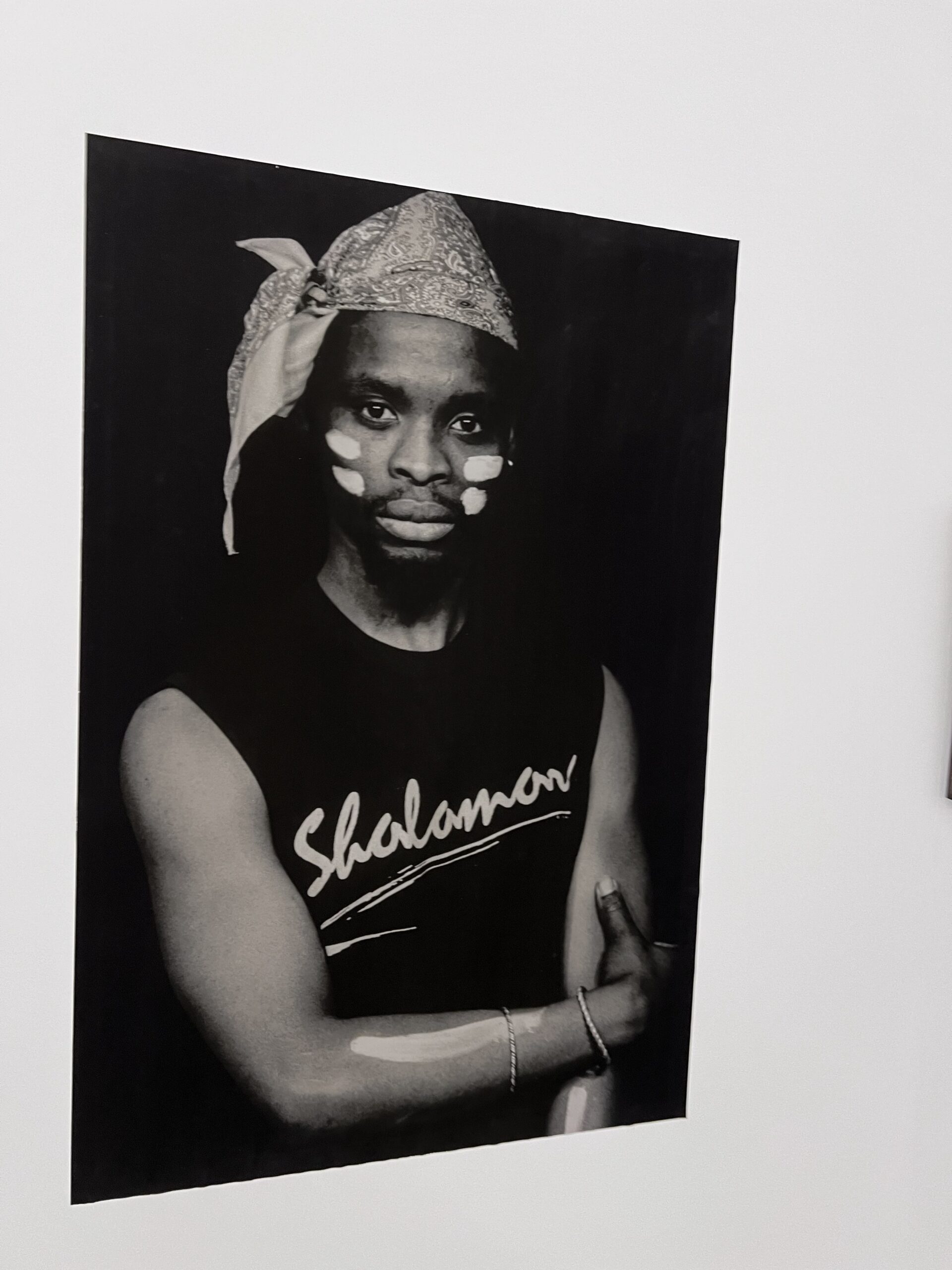
Home and Exile charts the whole life of George Hallett, but at its centre is the story of a twenty four year exile from South Africa, the creative drive that led to that, and the eventual return to his home.
Let’s assume for a second that you’re creative. Is that in your blood? Is it from your experience? Maybe it’s an inability to cope or process emotions any other way. What happens if that’s taken from you? And not just taken, but if the opportunity to do the thing that you know makes you function is never given at all?
As a late-teen and entering his twenties in the early 1960s, George Hallett was passionately pursuing a career as a photographer. His mentors included poets, writers, and artists. There was a scene he would become part of that would spark some to int special in him, but also tell an essential story of life in Cape Town’s District Six.
But in 1966, District Six became a designated White Area by the apartheid government. Encouraged by his mentors, and editors of Cape Town’s Drum Magazine, Hallett’s street photography became an important document of that process, including the early stages of forced removals, before his own right to train as an artist or photographer was taken from him.
Hallett’s story is gathered here from writings but also directly from, the curator, Christine Eyene’s own connections to him. Told through the pictures he took then, and the life that unfolded from the experience of exile, it’s a unique and personal perspective of the impact of apartheid.
It ends with his return, after twenty four years living in exile from his home, and a series of photographs that were seen across the world. The series follows Nelson Mandela during the campaign that led him to become South Africa’s first leader democratically elected by people of all races. Images I recall as a white bit growing up in Liverpool. Images no doubt recognisable to most people across the world. Following this, George Hallet became the official photography for the Truth and Reconcilliation Commission.
Meaning a boy from District Six, who grew up and sought his education in any way he could, from Cape Town, London, Europe, became the documentor of objective, lived, truth, in the country that removed his right to do just that.
Yet that poetic and powerful end to the story isn’t its strongest point. What stands out, truly, is a single vitrine of books.
The case contains part of the African Writer’s Series published by Heinemann in the 1980s. The books were previously published, but their intention here was to bring those texts to the UK, America and Europe, some, in newly translated English editions. George Hallett was commissioned to create covers for the series. Those images were a mix of staged photographs and his own archive from South Africa and London.
They made African writing part of popular reading across the world. And for every child who picked those books up because the cover spoke to them, it will start a new relationship with creativity that will last their lifetime. Hopefully, that will grow in them as potently as it grew in George Hallett, a man who changed the world, and whose archive continues to inspire.
By the time you read this, the exhibition is closed, but it will live on as an archive, and future exhibitions in other forms.
—
George Hallett: Home and Exile was open 23rd April – 3rd July at Exhibition Research Lab, LJMU John Lennon Art & Design Building
Words, Patrick Kirk-Smith