
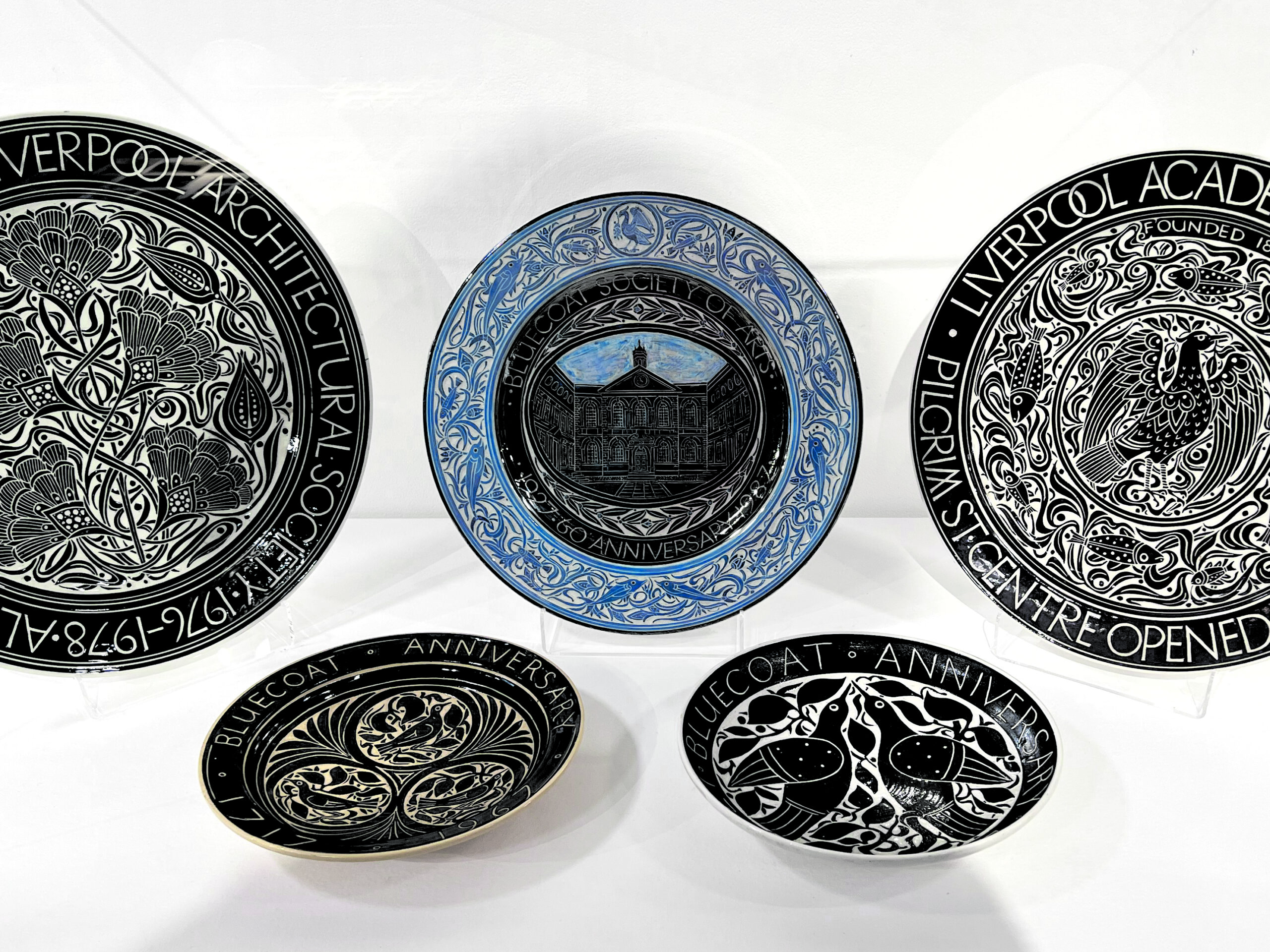
Julia Carter Preston is one of the most important British ceramicists of the 20th century. Her iconic and instantly recognisable style is collected, displayed and treasured by private and public collections, from the Walker Art Gallery, here in Liverpool, to the Smithsonian, in Washington. But it all happened here, at Bluecoat.
Bluecoat Arts Centre was an instrumental part of her career, never far from her practice, or life. This exhibition charts that relationship from childhood, and is probably the best presentation of exactly why Julia Carter Preston’s centenary needs to be celebrated across five parts. The programme runs as a series of displays across Liverpool including Liverpool Hope University’s Creative Campus, The Walker Art Gallery, Bluecoat Display Centre and University of Liverpool’s Victoria Gallery & Museum.
Here, above the vide, where her work has been displayed over and over again, as an essential part of Bluecoat’s history, is where Julia kept her studio. While working here, she taught, worked on commissions and regularly exhibited across the building. All while overlooking the courtyard garden.
Her fondness for Bluecoat was shaped in no small part by her father, Edward Carter Preston, whose involvement from the earliest notions of the art centre is reflected in the exhibition. The plaster bust of Julia, aged about six, made by Edward, speaks to more than a childhood connection to the building though. It’s part of a childhood in studios, actively engaged in the art world, not simply adjacent to it.
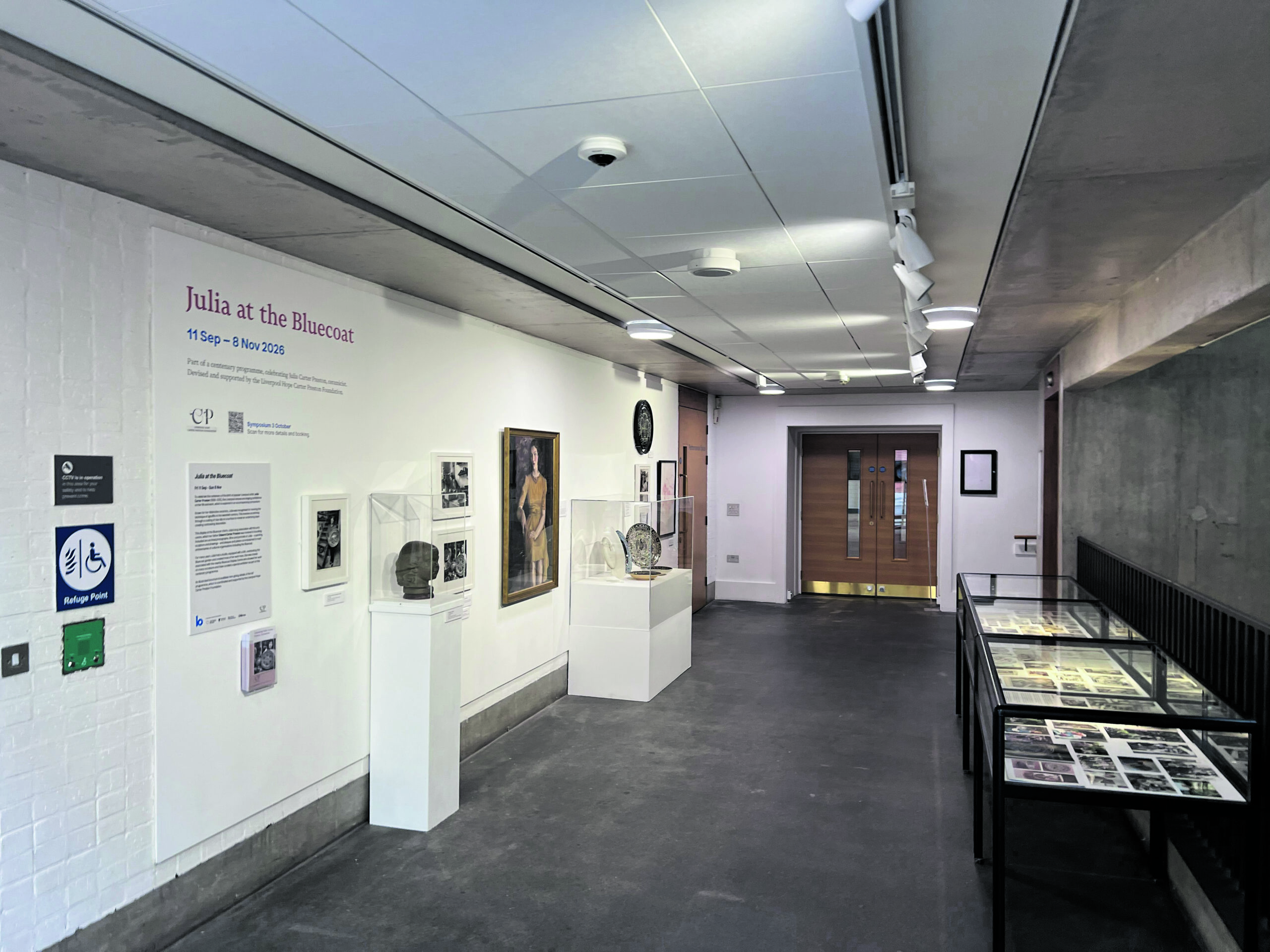
Coming from an artistically recognised family, Julia Carter Preston was surrounded by inspiration and encouragement on all sides. Her mother, Marie Preston, was a talented painter and dressmaker and her father was a successful sculptor. As well as these links to Bluecoat, you need to see how this relates to the wider city at the time. So aside from founding one of the UK’s best-known arts centres, Edward was also working as a prominent artist, and this work regularly featured his family, sometimes directly, sometimes as models for other subjects. One of his most known works, are his commissions for the Anglican Cathedral – stone carvings, at the south entrance, which used Marie, Julia, and his three other daughters as models for these now immortal pieces of this city.
This family life, represented here, presents Julia as a child of the city’s art world. Perhaps unfairly pulling focus from her own achievements, but for her, her father’s involvement in the early acquisition of the former charity school building was so crucial to who she became, that it is genuinely important to understand.
Her teaching career spanned many years and many colleges across the region, but finally, and most notably, as the head of ceramics at LJMU (formerly Liverpool polytechnic), where she taught many of the most influential artists to grace city collections today. She is said to have been less than inspired after visiting one past student, John Lennon, at a performance at the Cavern Club…
Living and working in Liverpool for the entirety of her life, Julia Carter Preston inspired many artists, not just her students. This is evident in the many artists exhibited alongside her in Bluecoat Display Centre, but here at Bluecoat, the focus is on her. It’s evidence of the legacy and that endures through the lens of her own history.
—
‘Celebrating Julia Carter Preston, Ceramicist’ began in September and runs through to November with some exhibits lasting till the end of the year, commemorating the centenary of her birth in 1926. Venues include Bluecoat, Bluecoat Display Centre, Walker Art Gallery, Victoria Gallery & Museum and the Cornerstone Gallery.
Words, Kathryn Wainwright