
Opening on Friday 6th February at Bridewell Studios, painter Brendan Lyons presents a solo exhibition titled ‘Discreet Discrete’.
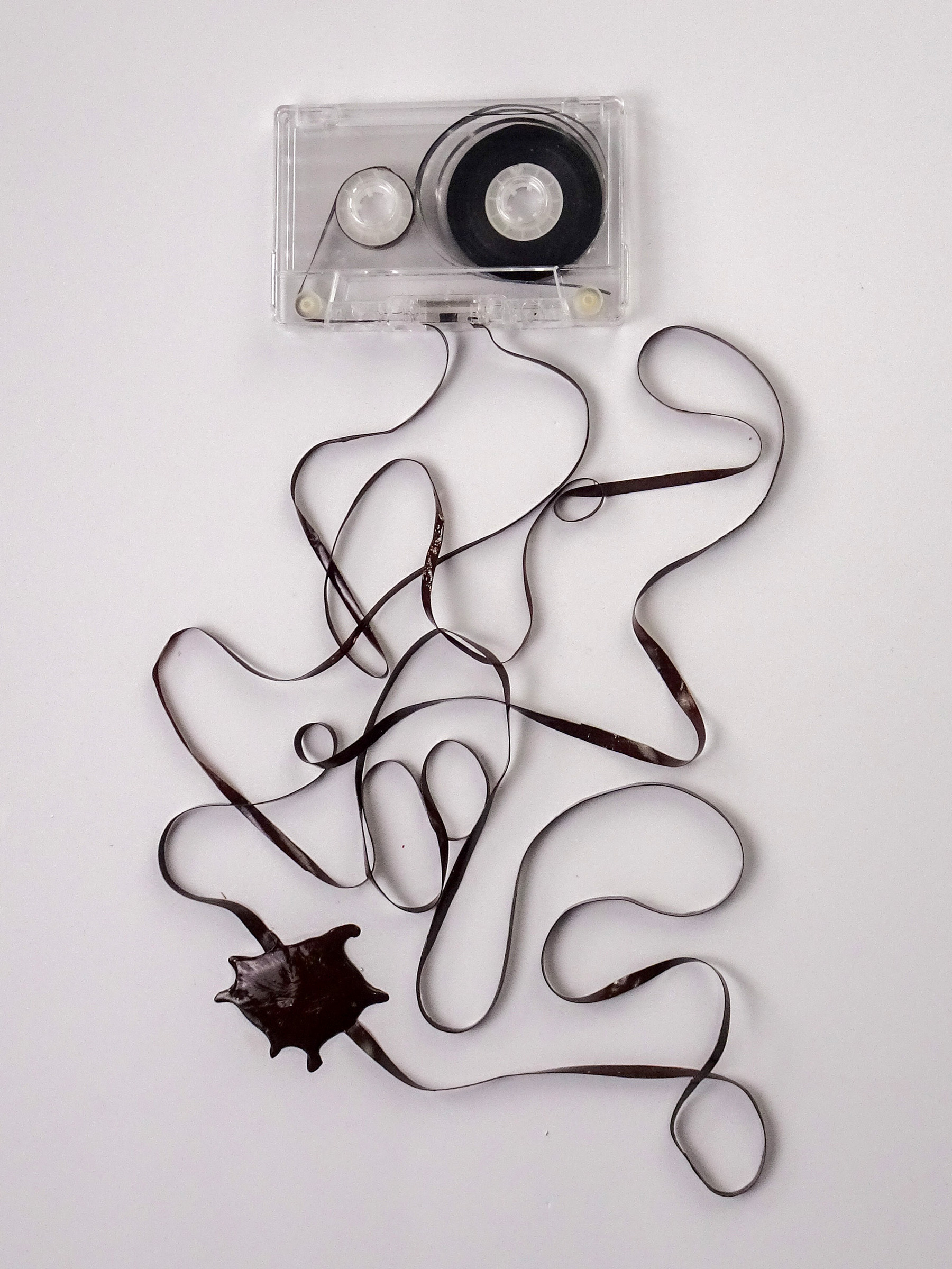
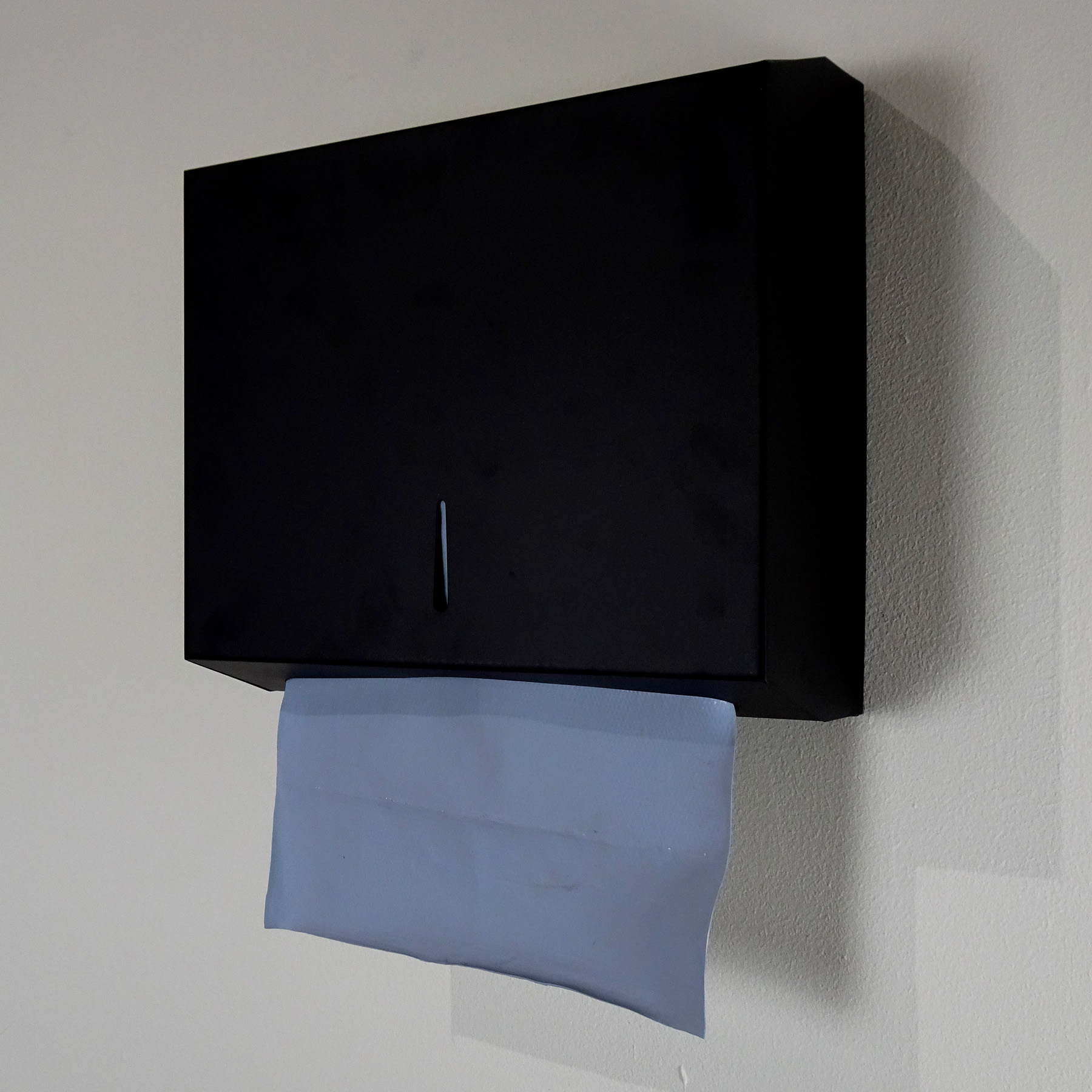
His works, at first glance, can look like everyday objects situated in a gallery – in this case, paper rolls and towels in dispensers, cassette tapes, a black bin bag, and climbing ivy on fences and barbed wire. Actually, many of these objects are made from acrylic paint alone, manipulated in a variety of ways to uncannily emulate their subject. The works, therefore, provide a link between the history of illusionistic painting and the materials that are commonplace in our everyday world, raising questions about what we value, what we look at, and what we exhibit. Alongside the exhibited works are a new series of affordable artist editions for sale.
I spoke to Brendan about ‘Discreet Discrete’, including his process, the way his work both adheres to and deviates from the traditions of painting, and some of the new ideas raised in the exhibition.
Leah Binns: What is it about an object that makes you want to recreate it out of paint?
Brendan Lyons: I like to play with the traditional use of paint to represent an object or scene through visual illusion, but to do so by making the paint take on the form of the object itself in three dimensions and not as a flat image. Shadows and form are actual rather than illusional but are still just a representation of another thing. The intended use of the paint is adhered to but not in the traditional manner. I choose the object by identifying a link to other traditions of painting, such as rectangles, windows, brushstrokes, supports, and wall-based items.
LB: Why did you choose these objects – the paper rolls and towels, the tapes, and the bin bag – and what made you want to bring them together like this? It’s interesting that these are mostly disposable items that we’re used to using, or they serve us in some way, but we don’t look at them for any significant length of time.
BL: Originally, I had a number of potential exhibition titles, including Dispense Dispose. I like the contrast between the precious and the disposable. The expensive value of artist quality paint compared to this paper. Rather than using and disposing of these items without thought, they are given unusual attention and reverence, while remaining untouched and nonfunctional. I like to highlight overlooked objects and materials and imbue them with value and make them attention worthy. The black bin bag is a motif I have used for many years and here the contrast between detritus and precious material is heightened. A temporal element is also present as the represented wastepaper inside the paint bag has passed to a post usage phase – a process that never actually happened.
LB: Here they’re exhibited alongside Endemical, in which vine leaves grow over and through barbed wire and wire fences in a three-dimensional space. The work brings up a lot of ideas about natural and industrial growth, and about function and ornament. The ivy and the wire, all made of acrylic paint, have a kind of tension with one another, as well as with the idea of a painterly surface.
What is significant about ivy in particular to you, and what made you start thinking about organic forms, after painting manmade objects for some time?
BL: I observe ivy daily on the rear wall of my house, but I didn’t consider representing it in my work until I investigated how paint might escape the boundaries of its support. This escape onto the surrounding walls breaks with the traditions of painting itself but at the same time is totally natural for the ivy it represents. This idea of constraint and attempted escaped is echoed in the entanglement of the vines in barbed wire and fencing.

LB: What new ideas and themes are you exploring in Discreet Discrete?
BL: This series of works is building on previous works shown over the years and is intended as a variation for me to explore. The combination of readymade elements with the paint is unusual for me and something I saw as a challenge to take on at this point.
In the audio tape works I am referencing previous exhibitions where I have represented adhesive tapes and their use in attaching supports to the walls – but this time I liked the thought of the tape having another fictional dimension with an imagined audible output as well as a visual one. The physical flow of the tape connects them to mark-making and abstraction.
LB: Is the idea of a homophone, referred to in the title of the exhibition, particularly important?
BL: I often place work in the exhibition space in a discreet manner which can easily be overlooked until pointed out. I also like the use of the word discrete as a definite mark-making process and a highlighting of objects. The contrasting meanings in similar forms that a homophone possesses reflects the duality I try to bring to my paintings.
LB: As you mentioned earlier, the works encourage us to reflect on our societal systems of value. I think that, as a viewer, the question of how long the work may have taken you to produce is an interesting addition to this theme. Are you open about your process? It must be very precise work, since there’s not much room for chance. Or is the paint quite forgiving?
BL: I use multiple techniques, developed over many years. Some involve intense work on a small scale with tiny brushwork to build shape – but others require the layering of large sheets and skins of paint, which requires a different schedule of simply waiting for the paint layers to dry over a period of days. This painting action is very different and uses flowing movements. The basic properties of acrylic paint allow it to be self-supporting when separated from a support. I believe one the original purposes of developing this plasticity in the mid-20th century was to avoid cracking on the painted surface. I use this property to manipulate the material in unconventional ways, while remaining true to the intended use of paint – to represent something.
LB: There are several moments of surprise or trickery for a first-time viewer of your work. Firstly, that these everyday objects would be exhibited in a gallery space, and then again when they realise that the objects are actually made of paint. What is it about trickery that interests you? How do you hope people will feel when faced with your work?
BL: I would like people to take a second look – and not assess their environment based on an immediate judgement. To question the valuation of materials and their intended use. I like the idea of drawing as much complexity as possible from a simple material – paint. This is possible due to the historic traditions of this ancient combination of pigment & medium and what function we expect it to perform.
LB: With the new inclusion of the readymades, that feeling of being unsure what you’re looking at is heightened, as viewers guess what is made of paint and what isn’t. Have you found that using them has opened up your practice significantly?
BL: For many years I would make paintings in which every element consisted of paint alone. I really enjoyed the discipline of pushing the capabilities of that one simple material to create as much complexity as possible – but eventually it became a constraint and restricted my options. I have certainly found this new body of work a conceptual challenge but it has been very satisfying to manage to reference painting through the use of wall based supports, rectangles, framing etc – while opening up new references to usages such as function, disposability and sound.
LB: Alongside the exhibition you’re launching a series of editions for sale. Can you describe the works that visitors can buy, and why it’s important for you to sell affordable work?
BL: My paintings are often labour intensive and use large amounts of costly material which necessitates them being an expensive purchase. In my previous solo exhibition at the Bridewell, I made a postcard work with blobs of blue paint on the surface, which referenced Blu Tack adhesive. They were only available to physical visitors to the gallery but were affordable and a very large percentage of the audience bought them and for their collections. I have expanded this concept and developed designs that allow me to produce batches of small works at affordable prices. There will be a number of varied works available at prices from £10 to £100 at the gallery and online. I have personally been frustrated that I have not been able to buy more artworks from artists over the years and would have loved to buy affordable editions or multiples.
—
Brendan Lyons is a Liverpool based artist. He co-curated (with Josie Jenkins) ‘Refractive Pool: Contemporary Painting in Liverpool’ at the Walker Art Gallery. His painting was selected for the John Moores Painting Prize in 2020.
‘Discreet Discrete’ opens at Bridewell Studios Gallery February 6th – 22nd
Thurs & Fri, 12 – 4pm / Sat & Sun, 11am – 5pm. Other days by appointment.
More info via Instagram @brendanlyonsart
Interview by Leah Binns