
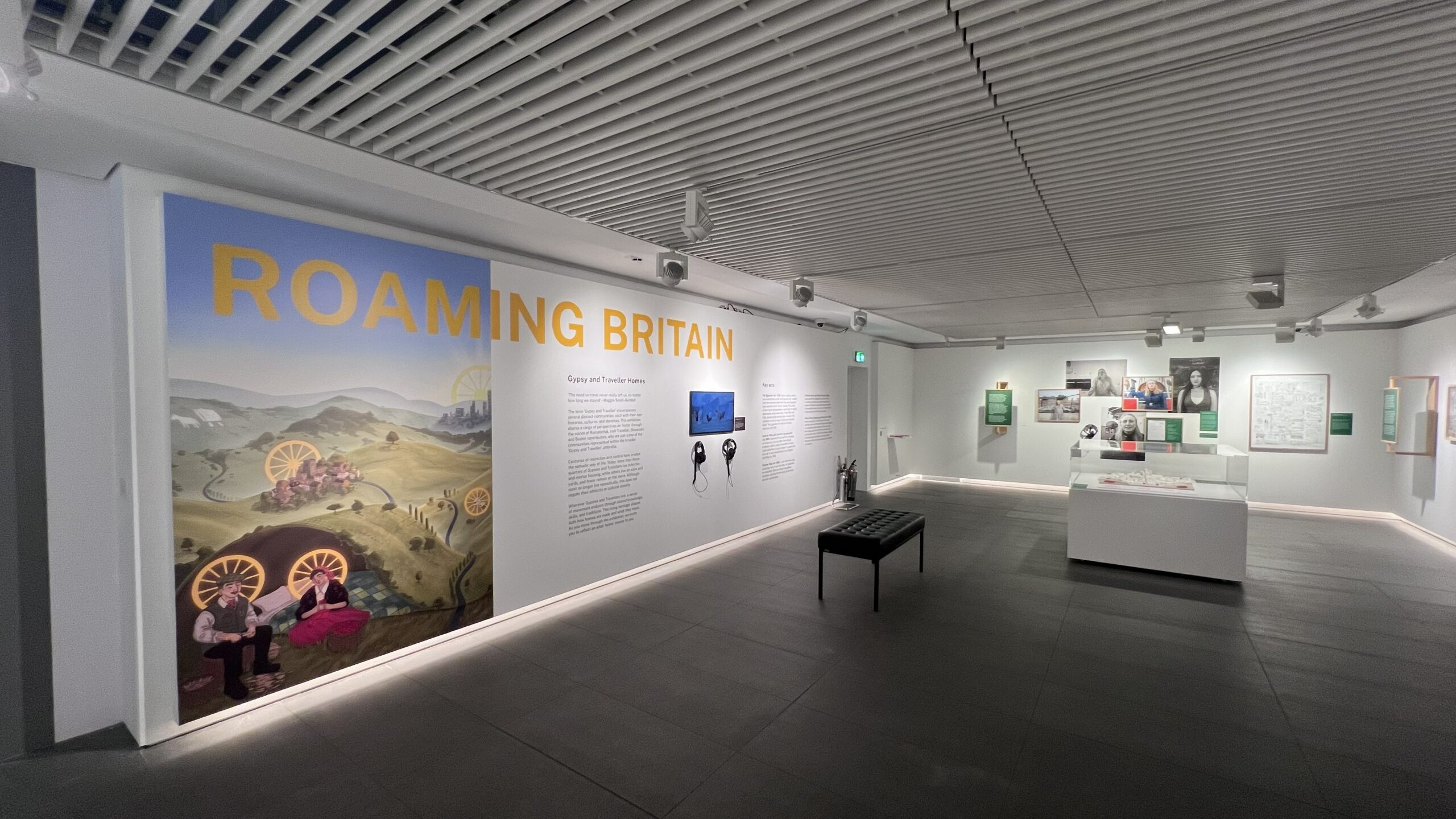
Home isn’t loose construct, but it isn’t concrete either. For Traveller and Gypsy communities, their way of life has been tangled up in that sentiment for as long as their cultures have existed.
RIBA North, a gallery dedicated to exploring the culture of architecture, often looks at the way bricks and mortar impact our lives. Diving this deep into the purpose of the spaces we inhabit is a challenge from them to us.
The communities best placed to understand that question are definitely the ones most impacted by it. The commussities whose culture is regularly challenged by changes to laws that have meant many now live in standard housing and adapt to maintain communities of communal ethics in increasingly uncommunal spaces.
Probably the biggest step in this, and the one most people are familiar with – and many will readily seethe over when it’s put to the test – is the Caravan Sites and Control of Development Act 1960. The act banned caravans from stopping on commons without a licence. Local authorities could create sites, but only 14 were actually set up in England and Wales.
For British Romanis, that meant that their whole culture was essentially eradicated overnight. They were evicted from their familial sites and stopping places, the communities disbanded, and the majority ended up finding homes in permanent dwellings.
The sites they were evicted from held spiritual significance as well as ancestral. That meant that age old practices died with the space.
Today, some of those families live the old life, others don’t. Some have moved to become boaters – a new diasporic community of travellers built from many displaced cultures who have ended up living on Britain’s waterways. Freedom is available here, but it is a mix of cultures often all viewed as one, and judged as one.
This emotional history is shared beautifully through the interactive exhibition at RIBA North, which shares stories from Romani, Traveller and Gypsy communities, reflecting on memories of how times and lives have changed with laws. It isn’t linked to, but follows on well from previous exhibitions in Merseyside, led by Liverpool Irish Festival exploring Irish Traveller histories.
That these stories are given the grace and space to be told, hopefully goes a long way to dispelling prejudices. That they’re being told by RIBA, hopefully means there are meaningful conversations about how to provision spaces of genuine cultural value.
—
Roaming Britain is open at RIBA North until 6th September 2026
Words, Kathryn Wainwright