
When I started writing for this paper (then blog), I was given a tour of Bridewell ahead of one of their shows. The gallery then was the smaller room with the fireplace. The gallery now was, at the time, a studio – I think it was Julian Taylor in there then – working on the ‘Band of Life’ Hillsborough Memorial sculpture across the ground and mezzanine floors.
And in a long line of artists before Julian, the room played host to Maurice Cockrill, one of the gallery’s first residents in 1976, and who remains one of its most celebrated.
Note the date. Fifty years. Half a century of this historic building being owned and occupied by artists.
Until the end of July, a retrospective not just of Cockrill, but of how the Bridewell led him to places in his practice he would likely have never reached, and how its rooftop enabled explorations with light and colour that were absolutely unique to that exact spot in this exact city, and at that exact time.
The exhibition, curated by Brendan Lyons, hung by Gareth Kemp, and overseen by Fiona Filby, is as Bridewell as Bridewell gets. These artists know this space. They love it, and at every step of the exhibition, you feel that.
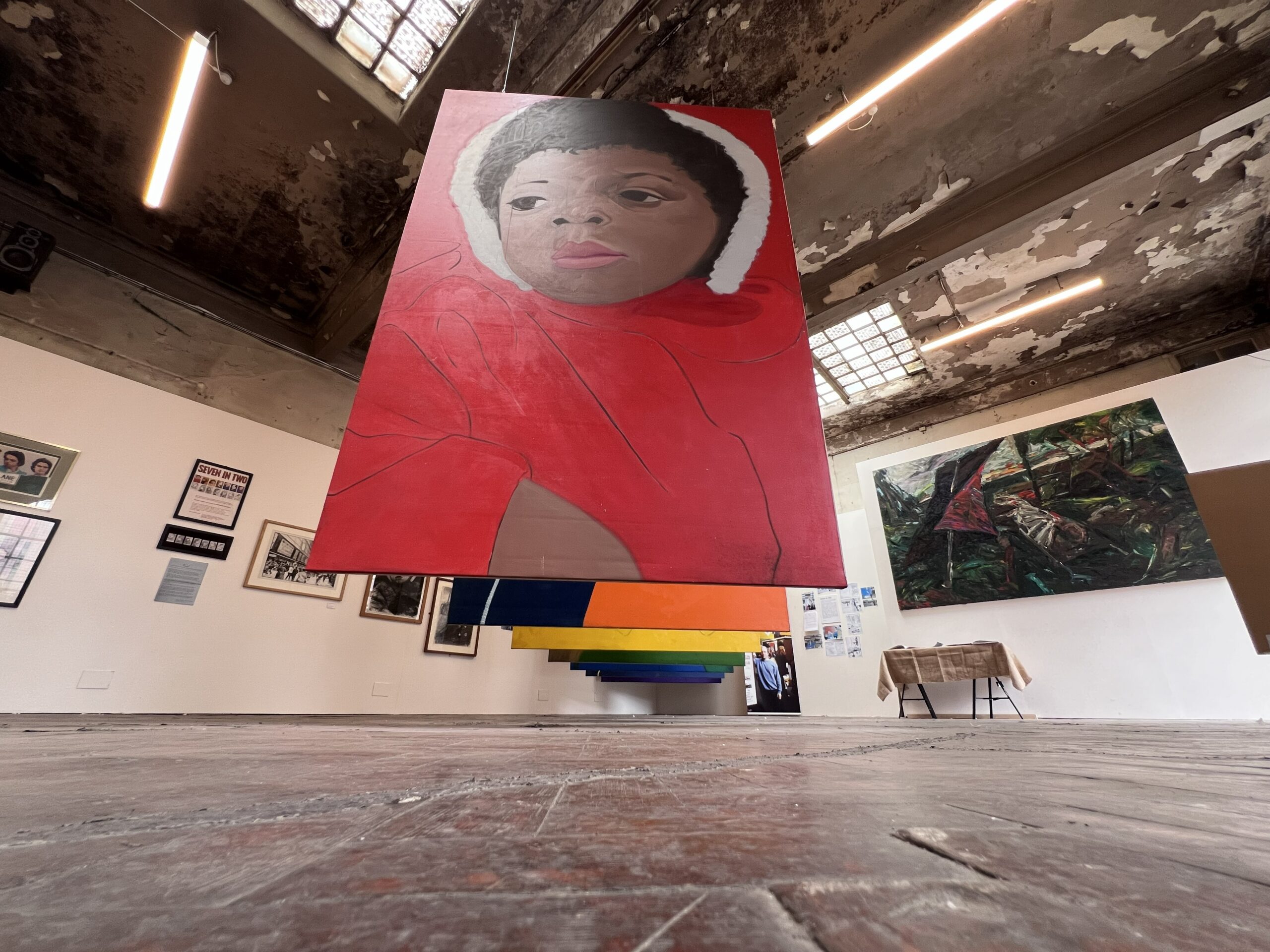
The canvasses that form the central focus of the show hang at absolutely precise separation from the centre, so they work with the way people enter the space, not to the corners. They hang low enough that they hold the entirety of the space, but high enough that you can crawl beneath and puzzle over their stretchers.
This is the first time since they were made that they have been shown together – now pieces of private collections, or museum archives.
Originally, they were hung through Lime Street Station, these portraits of passengers, planned, painted, and hung in order of age, and coded according to the colour spectrum. Those were the wishes of Maurice Cockrill then, and they’ve been adhered to now (a curatorial challenge to stick to such set rules in a space so vastly different!).
Interviews with the artists, taken from various archives, see him at work in his studio. Others track his obsession with the nightly lights of the old Royal Liverpool Hospital (now rubble and dust so fresh that some still needs cleaning from the windows of the flats above Greggs opposite).
At the opening, the artists passing through were in awe of the work, but there was an undertone of envy, that studios in the city today don’t offer that scale of space of to work. That there are ideas for this sort of ambition, but that realising them in impossible. And yes, that’s true to an extent, but there are artists who have focussed on facilitating this scale for themselves. Somehow though, seeing it here, in what was that studio, brings to life the reality of working like this, but also the sacrifice that means we now get to see work on this scale, in a gallery that feels built to be filled.
A gallery whose history is fixed to the wall, for now at least, as the old weathered Bridewell Studios sign welcomes all down the corridor. And whose archive and contributions to heritage tours has built this body of material for this show. Including the original text written for the display of working drawings at Bluecoat in 1979, accompanying the display of these huge canvasses at Lime Street.
It’s not every day an artist studio turns 50. I’m not actually sure I’m familiar with any others that are, so don’t miss this show. Just don’t.
—
Nocturnal Rainbow: Maurice Cockrill is open at Bridewell Studios & Gallery until 26th July 2026
Words, Patrick Kirk-Smith