
I’ve been thinking a lot lately about a question I used to focus a lot of writing on, before I got involved with this newspaper. The question is an extension of a thought by a writer called Claude Levi-Strauss (wildly middle class renderings on arty farty things that mean little to most people – you don’t need to read it unless you’re really into the type of question that follows this next bracket). Is it actually possible to have a conversation?
I promise I’m going somewhere and not just rambling in up-myself-art-speak.
The thought stems from the actual definition of the word conversation, which across nearly all sources means a free flowing dialogue without an agenda or structured subject.
Yes, basically, is the answer. It is obviously possible to have a conversation. But at some point, if that conversation continues it descends into this awful thing called a discussion – where purpose and structure define it. Because after enough time two people will move from a conversation into something more like a debate (if they disagree) or a series of affirmations (if they agree) to cement the outcomes of their chat.
My current thoughts aren’t on those human-to-human vocalisations though, they’re on the sort of conversation curators say you’re having when you read an exhibition panel, or the ones you think you’ve had when you’ve been to a Q&A. That is never a conversation. It can’t be by definition because it has a subject.
Why I’m waffling on about this now, is that there are a lot of immeasurably important topics covered in this newspaper, all through the mask of the exhibitions of others. And what we’ve written is not conversational (even the conversational thing on page 9). It’s a discussion continued on from an experience given by a very intentional curator or interpreter.
There is almost no way you can engage in the art world without having a discussion instead of a conversation. If you can see that in parallel to how you talk about football or gardening or nature or basically anything you talk to your friends about, it’s not that intimidating, but in reality, is it.
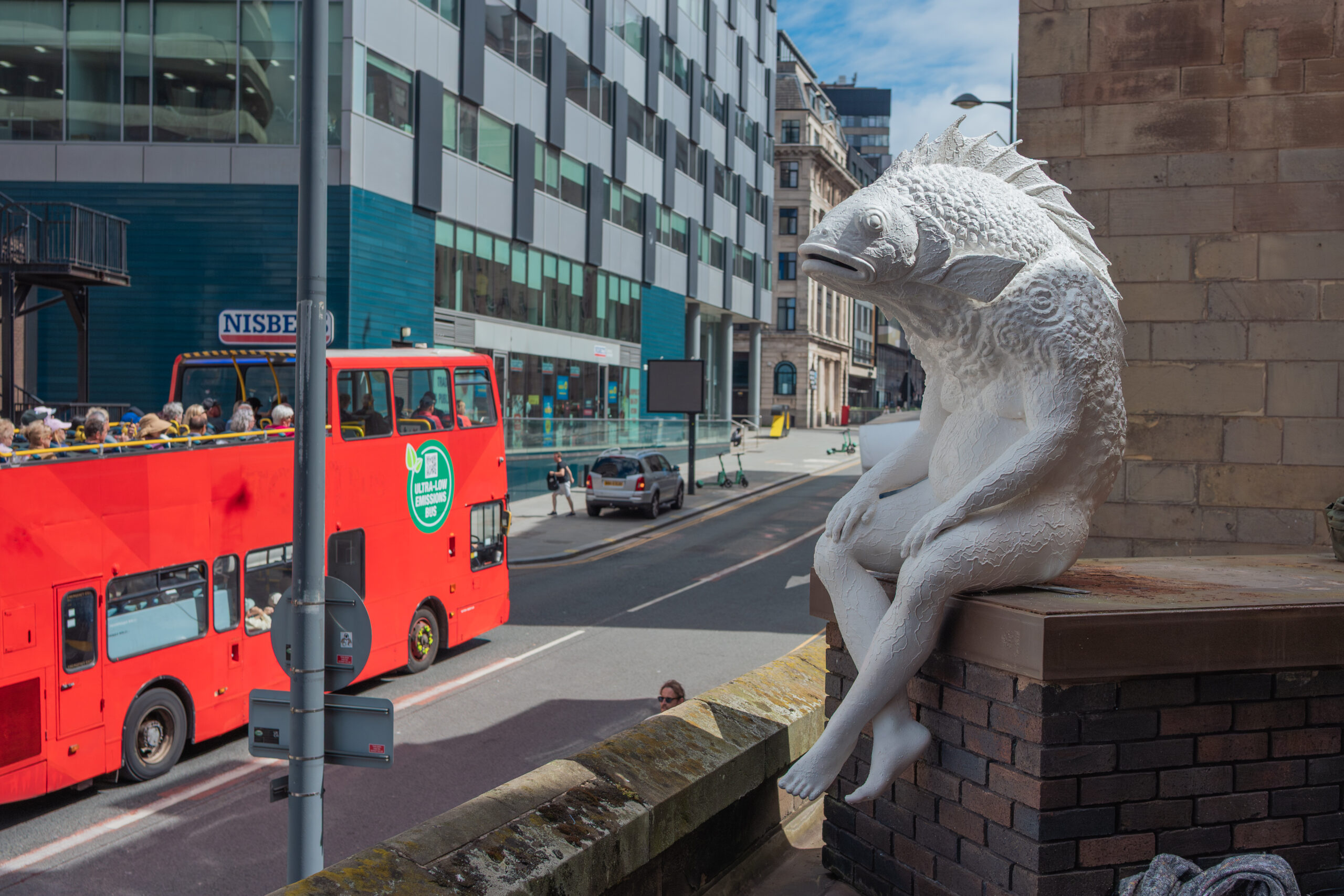
Because to enter into a space where the opportunities to talk are on a topic you may know little about, or feel on the outside of, can be scary. I’m not trying to diagnose the entire art world’s engagement problem here, but instead offer a small way in, because one or two people picking this paper up might be wondering why they were compelled to read a paper with a big fish head on the front in the first place, and they might not expect to be pulled to the Walker, or Gallery 1889, but they might just read on anyway, and they might be open to a discussion when they’re there, and it might change their lives.
And if they’re you, thanks for sticking this editorial out because it’s frankly a bit unhinged and self-indulgent, and I know that. But it’s that way because I’m equally worried about entering some of these spaces where the discussions are on a level I’m unfamiliar with. The challenge, and the way it changes your life is that you’ve got through that interaction (even if you haven’t spoken to anyone) and left with a deeper understanding, and without being judged.
So yeah, conversation, discussion, debate. If you’re a philosopher it matters. If you’re not, you’re just talking, and probably growing.