
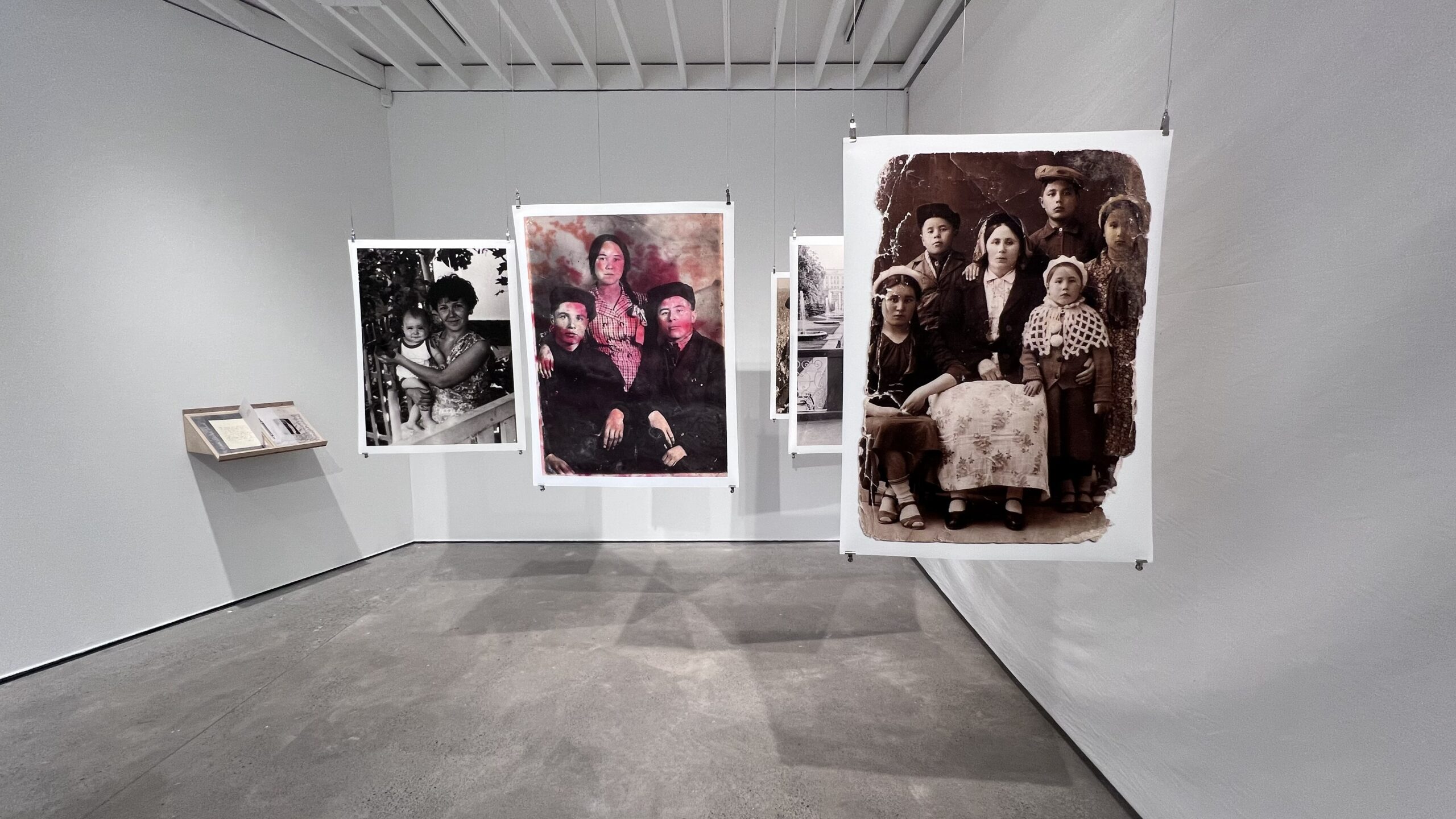
At some point, you, your parents, your grandparents, have probably put together a family tree. Or used online ancestry tools to piece one together. If not, you could, and pretty easily. I’m writing that with an assumption that you, reading this, are not descended from former Soviet states, because if you are, it probably doesn’t apply.
That’s the premise of this exhibition. Artists with Eastern European heritage are piecing together social archives and family archives in spite of a historic lack of records. Self-Defined charts the process of building those archives, and the results of it.
When you build an archive, it is typically objective. The archive’s user places subjective meaning on it later. Here, those archives are being created within a very specific historical context, by artists, so it is entirely and intentionally subjective. So this archive that is being interpreted into performance tools, collage and artwork while it is being built, not after; the next step in the archive, actively informed by the last.
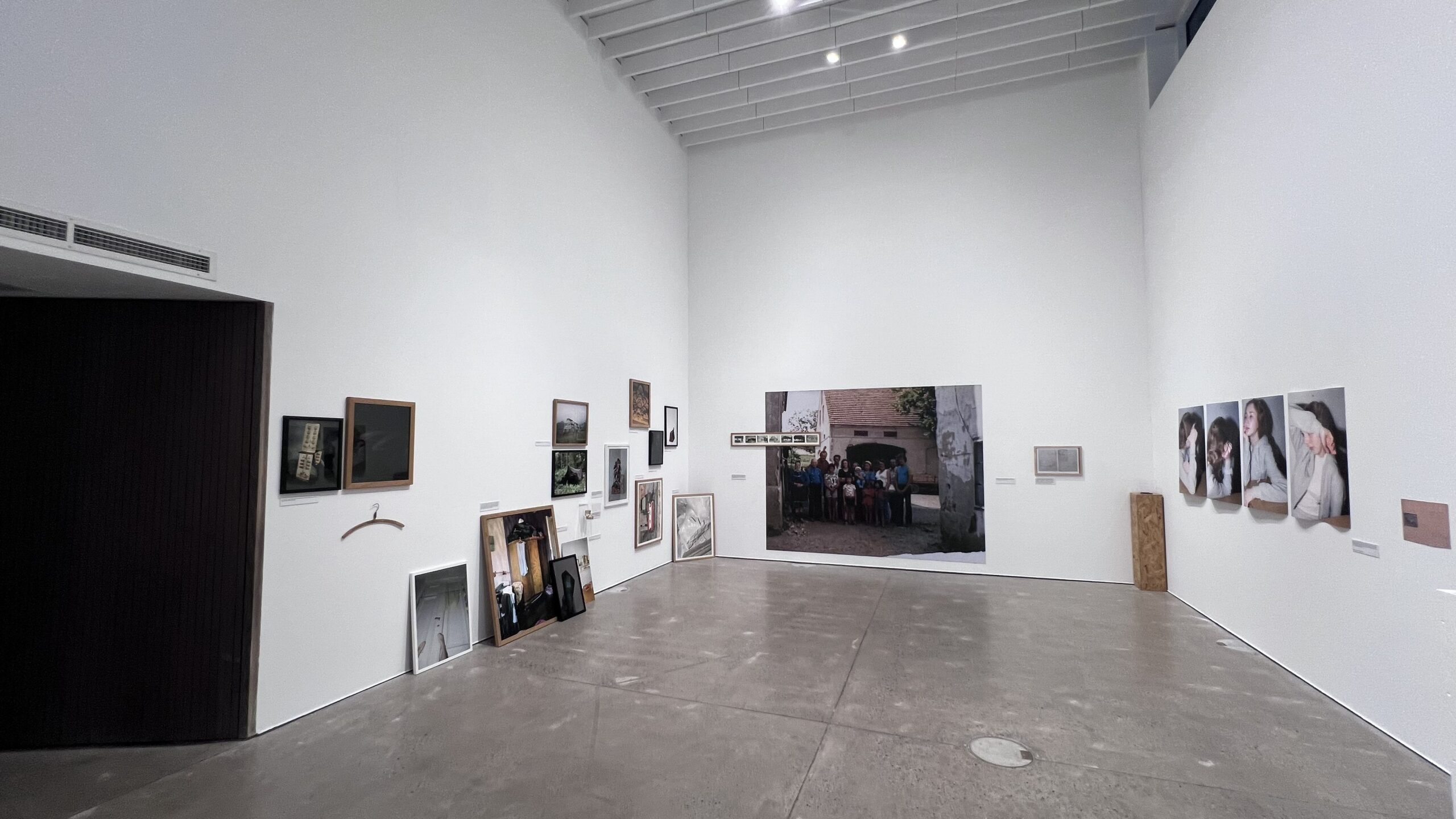
Each work at Open Eye Gallery currently is a sharing of a very specific point in several stories, and possibly best shared by Lia Dostlieva’s ‘Ten faded faces’. The film creates a memorial to an impossible archive. Only one photograph remains from 1934, a time when Ukraine was recovering from a Soviet-orchestrated famine. The result is a fever dream attempting to be a memory, but with everything falling out of place. In an exhibition exploring archive-building, this is perhaps the most poignant reminder of the effects of losing those documents, photographs and reminders of how political history actually impacts families.
Although it’s Andrii Dostliev’s ‘Death of Lucretia’ that takes the brief and runs with it most profoundly to create archive from nothing. The work, based largely on commissioned tourist photos from Svitohirsk in the Donetsk region in the East of Ukraine, and creates mockumentary films and writings around the stories these images tell. And reading it, I genuinely don’t know what is fact and what is fiction.
The story focuses on Lucretia, a possibly fictional character, created from the images sold to tourists. It works its way through the sites, adding social and personal context, and all the while you’re reading it, you’re questioning the story. And there, you’re put in the shoes of every artist in this show, trying to separate fact from fiction based on an archive they had to fight for.
If you’ve never considered archives as a right, you probably will after this. It’s an effective exhibition that takes it power from humour as much as from sorrow.
—
Self-Defined. New Stories From Archives is at Open Eye Gallery until 7th June 2026
Words, Patrick Kirk-Smith