
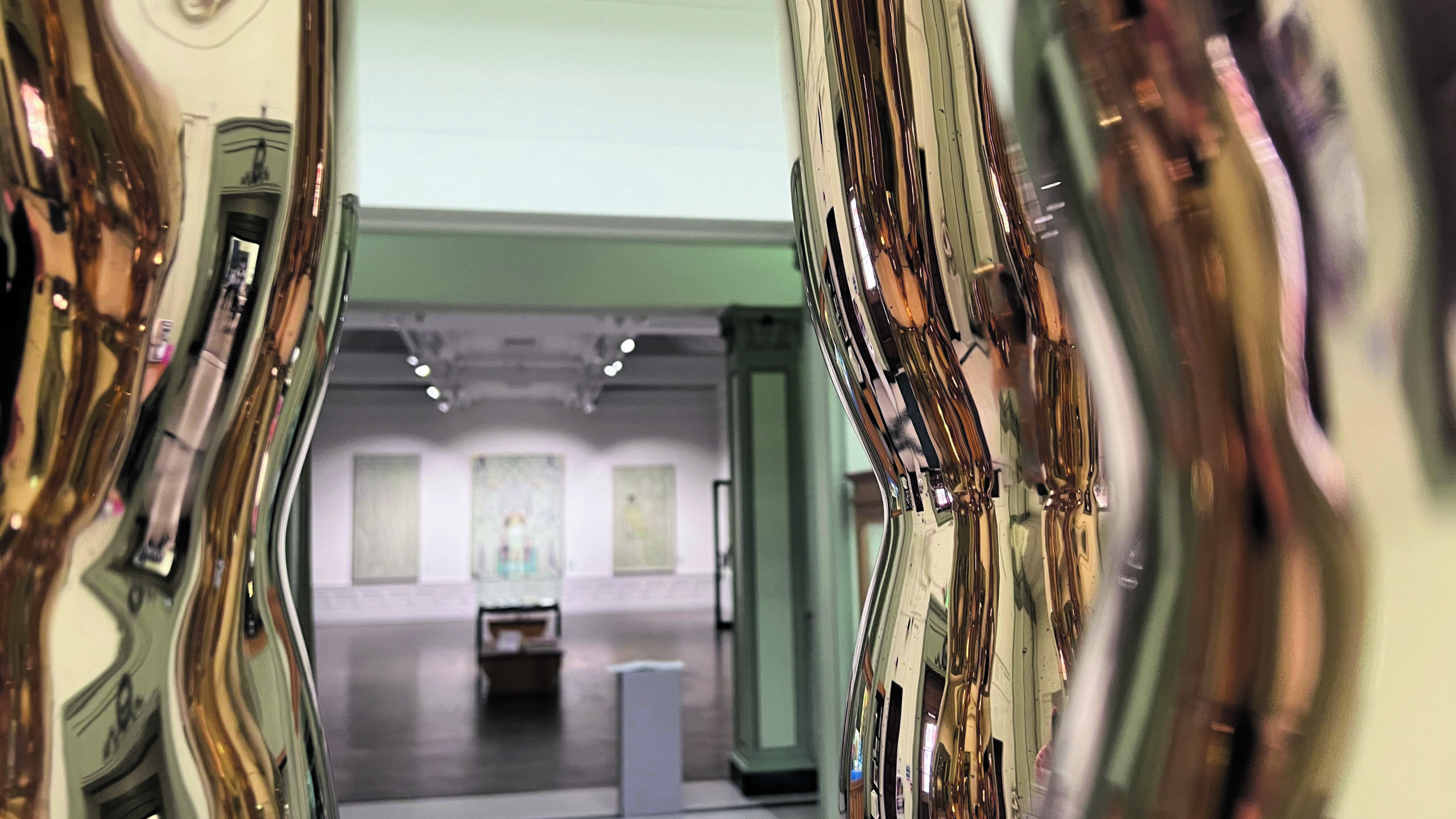
Intrigue, probably, is the word that sums up Leonard McComb most appropriately. Not ours, his. He was an artist whose work was so clearly inspired not just by the world around him, but by the styles and materials that were developing in the art world alongside his own career.
This display at Williamson Art Gallery & Museum, the largest ever of Leonard McComb’s, tracks his entire career, and through it, we get to follow shifts in material, shifts in the energy of his painting, in the dynamism of his colours, his themes, and his focus.
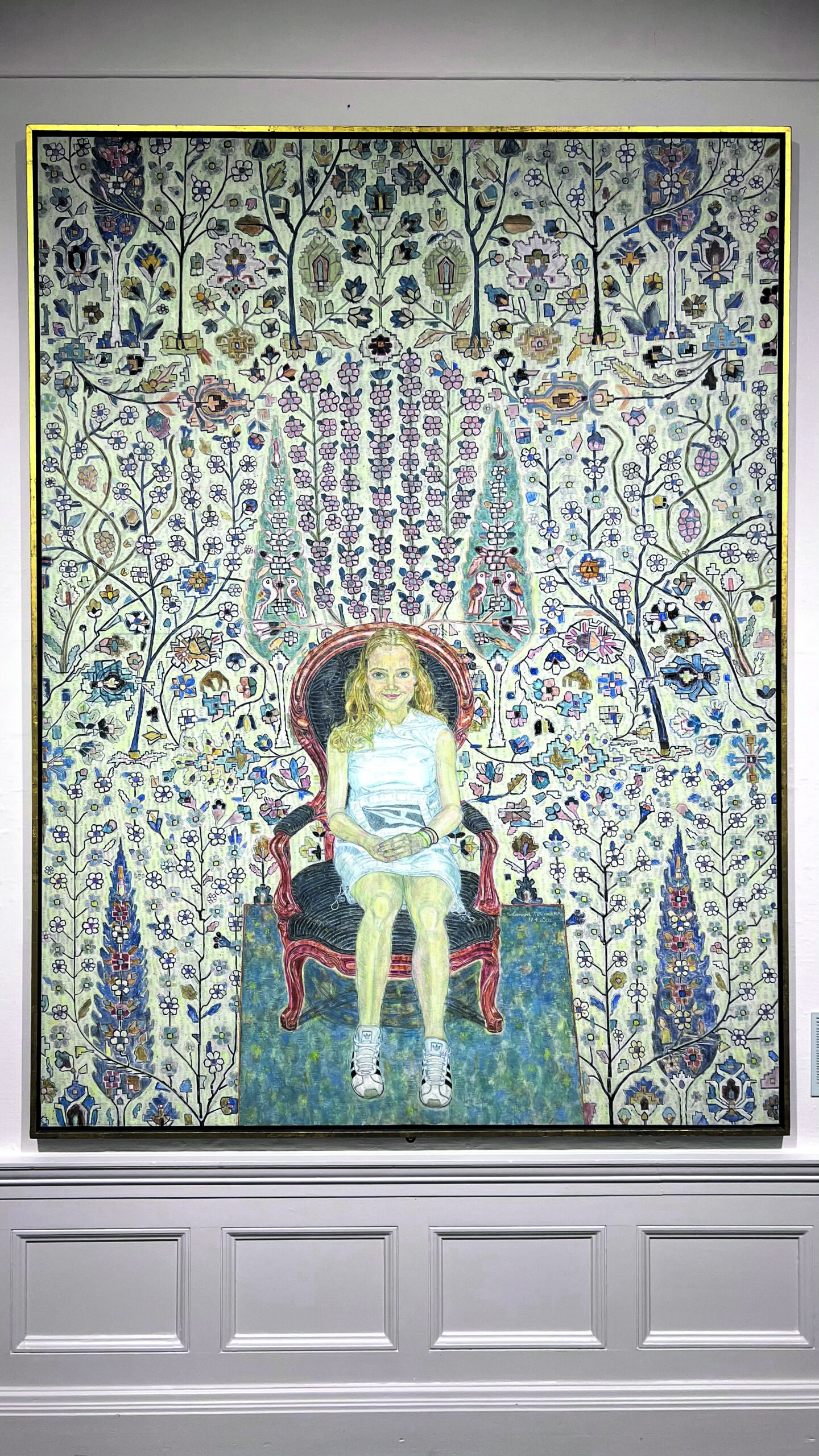
Leonard McComb was never an artist following trends, but he was also not one to ignore them. Yes, he had a style. Yes, there is an absolute autonomy in his work. Yes, you can tell them a mile off. But, if you’re expecting something from this retrospective, you’ll probably find something else.
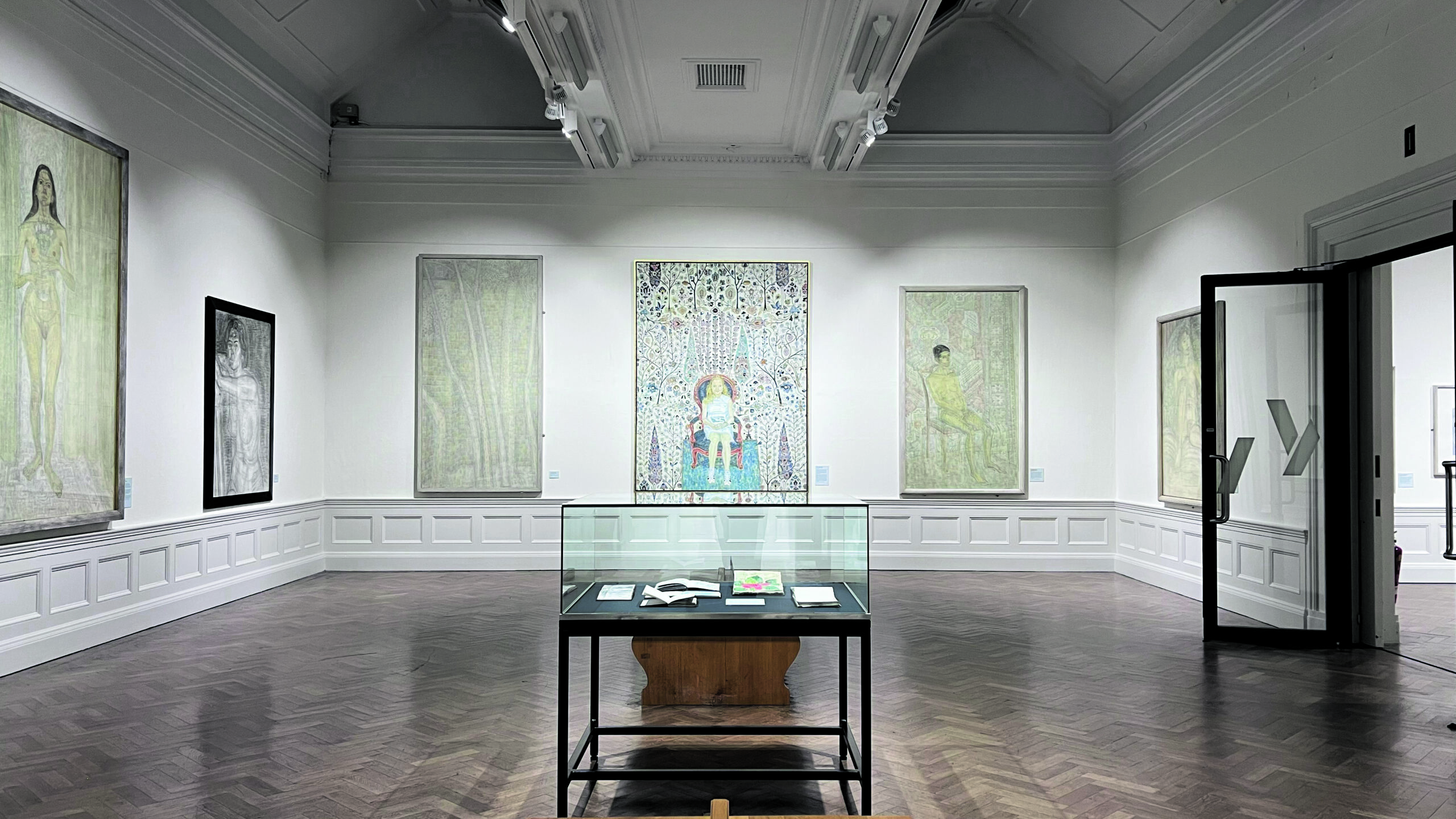
I will always advocate for galleries to show the work of living artists, and evidence their influence in the present, but occasionally, its worth remembering that the artists you read about are rarely portrayed in full. Highlights, or easy to digest snippets of their work are summed us as a defining feature. Here, at the Williamson, we’re given the whole.
Experiments and indecision work their way from sketchbooks to canvasses. The reworking of the hand of his mother, in ‘Portrait of the Artist’s Mother, Mrs Delia McComb’ is visible in the finished painting – one of his most known. But in books, you’ll find her face in focus, her hands cropped. The visible amendments to her hand, softly clutching her saucer, are affection and obsession; mistakes that mark this as more personal.
And then next to it are the works that seem polished, but are worth diving deeper into. ‘Portrait of a Young Man Standing’, a life-sized polished bronze statue was sculpted from a life study by hand. It’s original version in the Tate Collection was hand gilded by his wife. The polished bronze here in the Williamson serves as an alternate, and was deliberately meant to stand alongside his other works on the nature of humanity, and the natural world.
There are considerations like this throughout his practice. Each of them evidencing his acute awareness of how one strand of his work relates to the next. Nothing was created in isolation, and even the smallest amount of sleuthing through date stamps will show how Leonard McComb never had a phase. Sculpting and painting were always part of a whole, always designed to share something that the other couldn’t quite capture.
One of his most iconic drawings, ‘Rock and Sea, Anglesey’ comes to life with an extract from his sketchbook:
“Rock living granite
Need to survive, live force
Dignity of each port interlocked
For survival, washed, pounded by
The Sea. As I work, underneath
my feet the sea surges in underground
vaults. Snake noises! The crash of waves
on the rock and consequent shower of draining sea water”
The 33ft pencil and monochrome watercolour work calls you into its room. This room, absolutely defined by this work, is where the personal lives. It seems to recreate a moment in the artist’s life, where nature in all its power offers resolution to tangled lines of his life to that point.
Nearby, a work simply titled ‘Bowl’, is shown exactly as intended, reflecting obscured grey light from the monolithic drawing beside it. But here, it pulls in those other significant moments. His mother, his passions, and his most laboured works.
For an artist to work through one of the most tumultuous periods in art history, soak up influence along the way, but remain utterly dedicated to representing his own sensitive view on the world is quite breathtaking at times. He was never stale, but never led.
I barely knew his work before this show. I know it intimately now.
—
Leonard McComb: Nature & Humanity is open at Williamson Art Gallery & Museum until 31st October 2026
Words, Patrick Kirk-Smith