
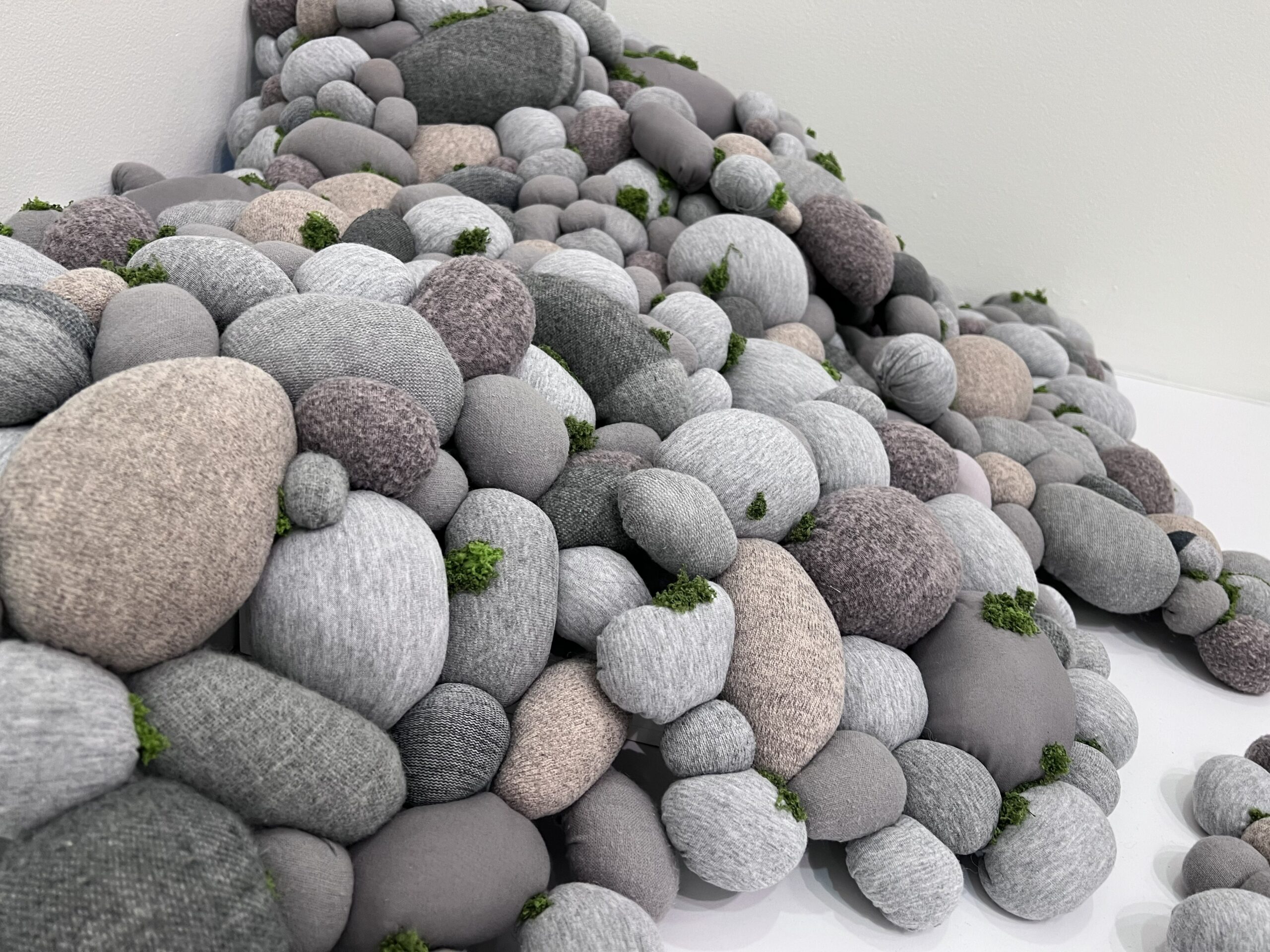
Currently on show at Kirkby Gallery, Julie Dodd’s presentations of echoes (repeated, regurgitated events) is a display of intricate craft, underscoring how our ecological actions/inactions begin to camouflage our impact on the planet.
The exhibition is made up of collections of repurposed objects, each responding to a self-set brief. Each is delicate and durational, with repetition at the heart of their creation.
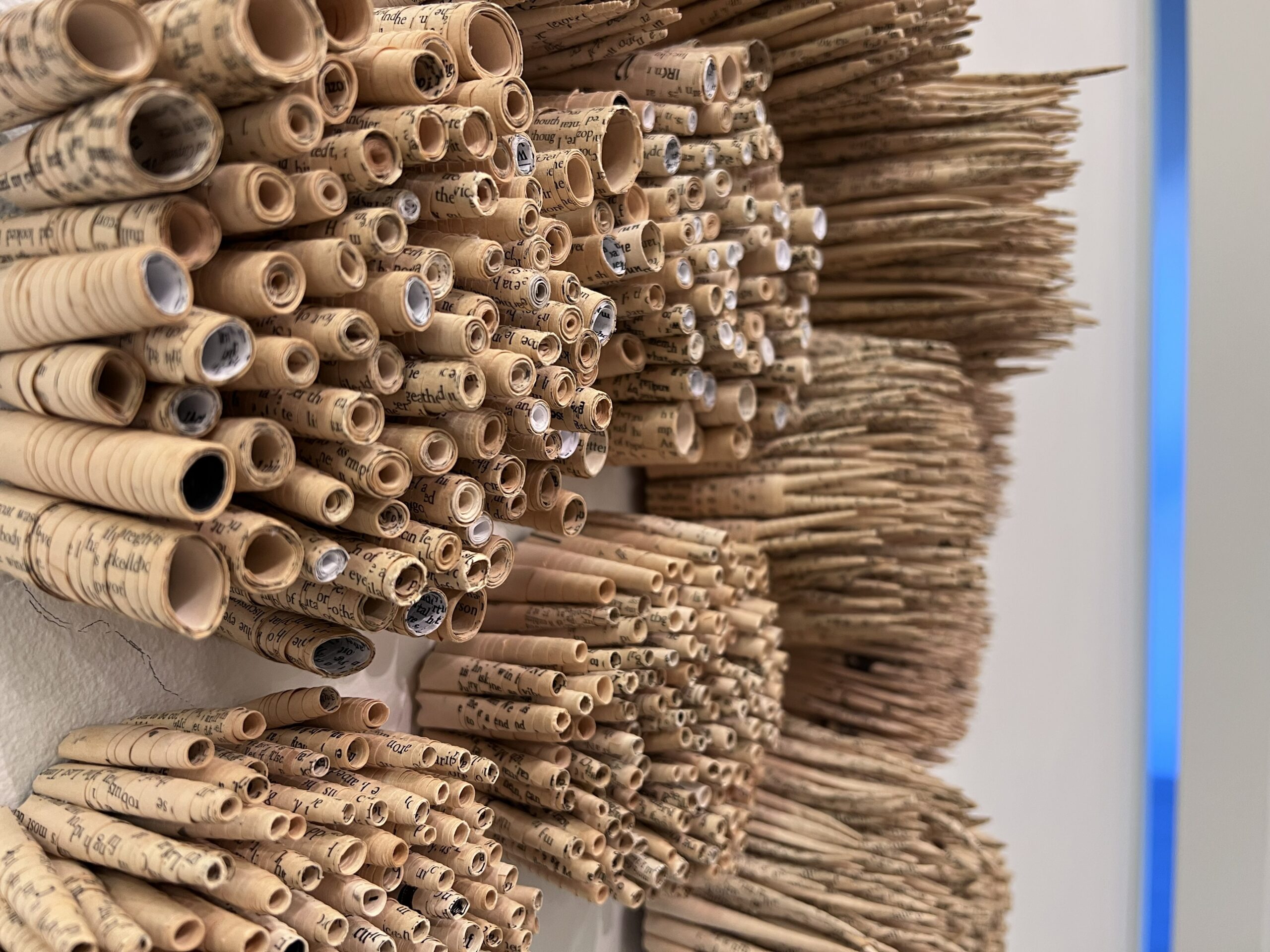
Thousands of rolled book pages make up coral-like relief structures. Here, the repetition is like a meditation from the artist, seeking to repair a sense of a lost reef. But it also represents the repetition of our collective action to destroy them, with each action that disrupts them feeling less significant – more routine – than the last.
That sentiment is echoed in fabric reconstructions of pebble riverbeds, tree rings and butterflies. It’s not all organic though. Most of the work is mourning the demise of something, but one it’s actively discouraging the use of something else.
Plastic Fossil Remains considers a future where plastic is the predominant preserved remnant of today. The works are decorative, but the words alongside them set a solemn tone for the rest of the exhibition.
Kirkby Gallery feels like it has real purpose at the moment. Exhibitions that incite craft, and invite engagement through workshop programmes mean that the gallery is nearly always buzzing with visitors actively engaged in something. And they are always inadvertently adding to the weight of the exhibition’s own argument. It was the same with Ruth Moilliet, and with Jeff Young & Mike Badger. Their work meant making the most of discarded materials, and everyone leaving felt like they’d engaged with that.
Here, Julie Dodd’s work achieves the same; an audience leaving better informed and in better health than when they entered.
—
Echo, by Julie Dodd, is open at Kirkby Gallery until 14th August 2026
Words, Kathryn Wainwright