
I don’t think I gave this the respect it deserved.
Somewhere around Chronicle 3, I realised I couldn’t.
My thoughts had become interrupted, paced, and unstructured. I was trying to process somebody else’s guilt and grief.
It felt, probably, like this does. Sorry.
As I write this, the evening after, I’m still welling up. As I left, I asked [redacted – I’m not sure if there’s anonymity required here] if they were ok. They’d been staffing the exhibition, and a large part of that is checking whether visitors are ok; if they need to talk; decompress. I was there for an hour, and it wasn’t enough. For them, this was a life affirming show.
For me. I found it petrifying. I’m not sure I’m at peace with it. I don’t know if I ever will be. The artists, though, did share every possible response. Every possible configuration of grief, and anger, and loss, and fear, and peace, and forgiveness, and understanding. (I think) this exhibition, and the eight years that led to it, were probably crucial for them.
Sorry. Again. I’ve just realised I’ve not actually said anything about this.
I don’t know if I can.
It’s just guilt. That’s all I’m feeling.
Jesus.
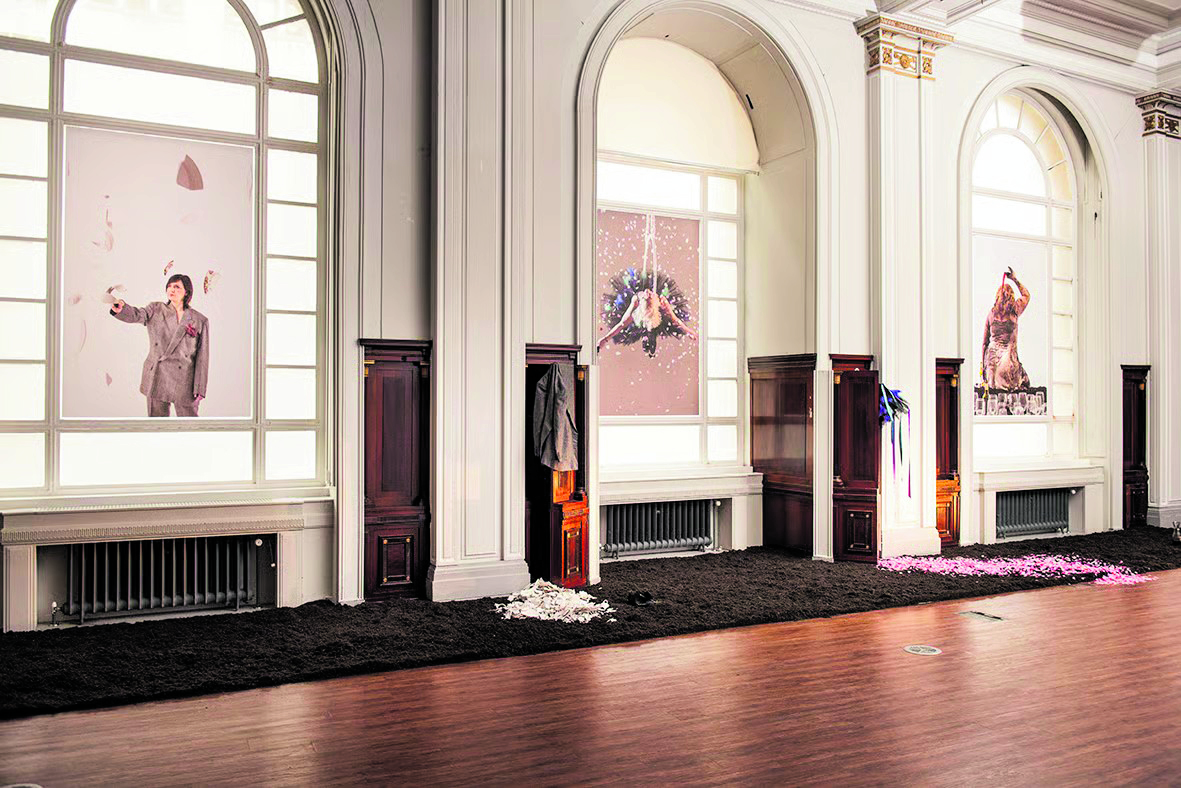
It’s Close to Home. Produced by Heart of Glass, who have, to date, supported eight years of work by Mark Storer, towards this potent exhibition highlighting perspectives on suicide, and those it touches.
I am trying, so hard, to make this piece of text make any sense, but I’m just writing through soggy eyelids, and I honestly don’t know if I’m trying to process emotions the exhibition brought up, or if I’m feeling guilt at spending under an hour in a space that deserved a day.
Suicide is an outcome of suicidal thoughts. One in four adults are thought to have had suicidal thoughts at one point or another in their life. Yet the act itself is so taboo, that when you are faced with it, and the adult, realised, rational, and reflective thoughts on it, from those who have been directly affected by this outcome, it’s hard to process.
The result, for me, is this disjointed block of text. Barely followable.
In part, its because I watched a man cry today, because he was presenting a process of grieving for a mum he never got to know. And because I kept hearing the same phrase that suicide had been life changing. This was reiterated by Christopher Wilhoughby, whose own suicide attempt led to him to try writing a letter to everyone he loved, affirming that this was a new start. And that while what got him here was silently unacceptable to most people he was going to write to, it was what got him here. The letter, finally finished through this project, is one of the most powerful things I’ve ever read.
I don’t know how to write about this without listing stuff that’s basically on the website.
How do you write that letter? Not the first one. The one that’s expected with this, but the one that comes next?
This is one of the hardest things I’ve ever had to write about. If not the hardest, because I found the entire thing immensely comforting, but I also remain wrecked with guilt that I can’t do it justice.
In Chronicle 5 (the project is split into chronicles – they were all created over the course of the project) a more collective representation of suicide is less comfortable. Less wholly affirming, but certainly useful for those living with loss through suicide. It’s a mix of community-responses-turned-film. As a result, some are positive reflections on the peace of a loved one; some share the speaker’s peace in their own emotion; others are far from that. It’s brutally honest in that. Because not everyone feels ok after this. Some here seem to be trying immensely hard to stop being judgemental, and falling short of the mark. But their effort is what comes through; effort to keep on loving and respecting the choice, despite not being ready to accept it.
And then that pang of guilt again. Because I know I’ve got to go. And that I’ve seen a fraction of the perspectives.
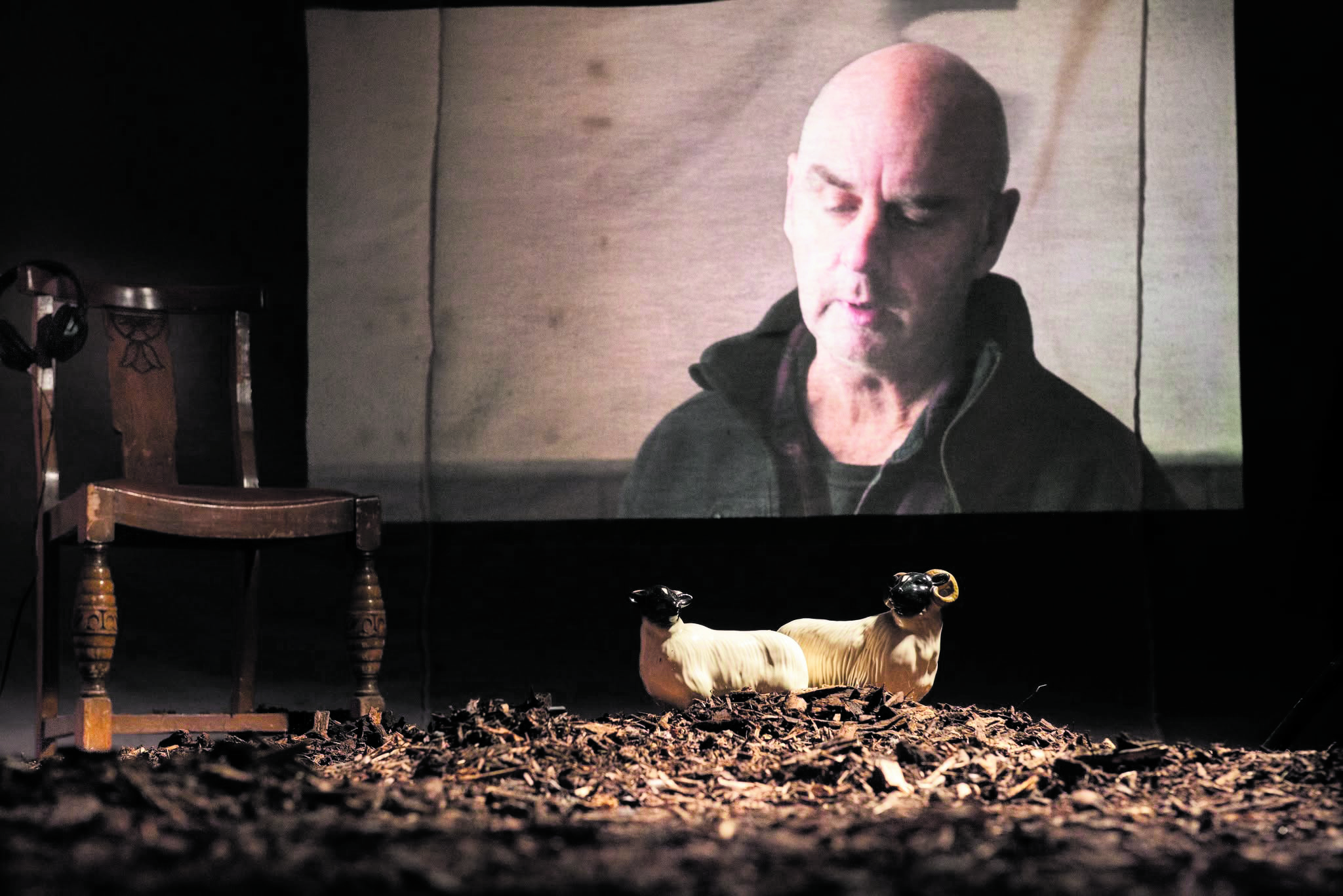
Before I go – and I’m really starting to feel rushed now, because I know I’ve got a meeting, but it can wait (they can, and they’ll forgive me, I hope (they did)) – there’s the space I was most aware of: Mae Dal Angen Godro’r Gwartheg (The Cows Still Need to Be Milked).
This is a multi-part installation by several artists, some collaborating directly, others informed by their peers, all making a whole.
It is intensely moving, and the piece of this story I felt the most attached to. It’s the piece where you hear the first-hand accounts of those most at risk. Their voice shaking with pride and fear in equal measure, musing on a life that they know is seen as an industry, and on a lifelong obligation to themselves, their parents and their children, that has to sit somehow in toe with an obligation to consumers.
The interviews are factual, list-like. There are positives (“We’ve had nice weather in April.”) but they’re interrupted with work, and concluded with the son, holding the interview by himself now that his dad’s gone to sort out a cow, reflecting on being taught to help with calving – not just that childhood connection to their stock, but to the animal itself, and to his dad.
Despite that intense familial base, this industry is inherently isolated. The pressure to deliver with not just a lack of thanks, but a palpable awareness of being taken for granted, comes through in nearly every reflection in this self-contained section of the exhibition.
I don’t know if I can share this text. It’s more than half way to stream of consciousness. I’m scared it clouds the exhibition. But I don’t know how to write about this without it being an emotional response. Because I’ve written two sides of paper, and I haven’t backed away from on the edge of tears. I do know that I need to represent it in these pages. Because it deserves space.
There are pieces of The Suicide Chronicles available to listen to, and to explore across Heart of Glass’ website. It’s worth (and I’m not saying that because it wraps up a piece of text, I’m saying those selected words because it is) your time to spend as much of it as you can give, and a little more to go beyond the exhibition, and read and listen to what you can.
—
Close to Home is open until 10th October at the Cunard Building. The exhibition was produced by Heart of Glass with artist Mark Storer as part of The Suicide Chronicles. Find out more at www.heartofglass.org.uk
Words, Patrick Kirk-Smith