
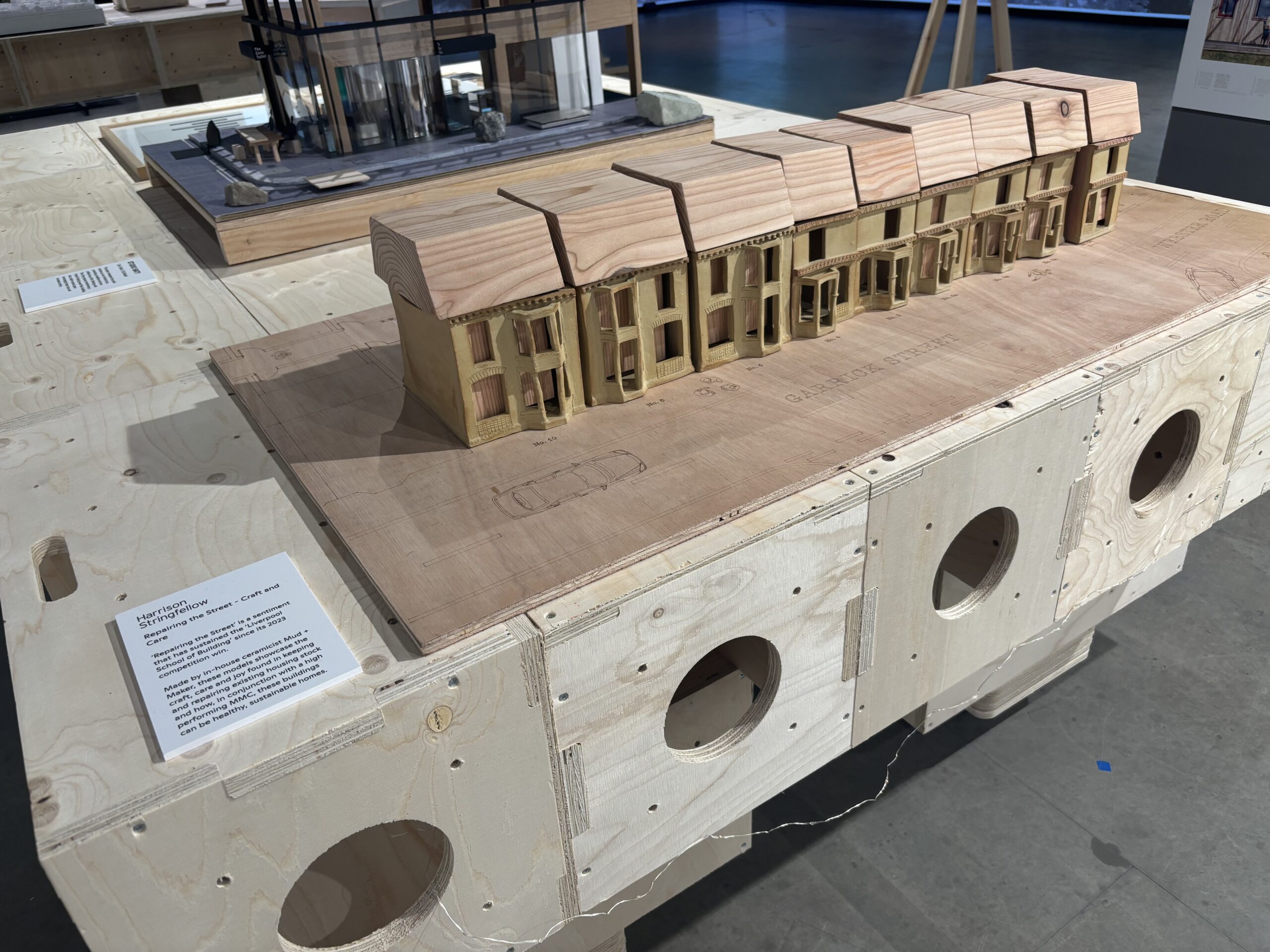
For someone whose practice has long centred around community collaboration, housing, accessibility and grassroots cultural organising, being invited to take part in Repairing the Street: Value, Care and the Politics of Housing at The Building Centre felt less like entering an unfamiliar conversation and more like encountering parallel practices emerging through different disciplines.
The invitation came through a screening of Without These Walls, the short film I made with Janet Brandon ten years ago in response to the demolition of my community in Everton under the Pathfinder regeneration scheme. Revisiting it now was a reminder that what felt urgent then has never really gone away. Although the film is rooted in a specific Liverpool history, the conversations around it made clear that the same issues of housing, displacement, land value and who gets to shape the places we live are still unfolding today.
A significant part of what made the experience meaningful was reconnecting with the work of Harrison Stringfellow Architects, the all-female practice behind the programme. I had encountered them years earlier during the period when our family home was being demolished as part of the Pathfinder scheme, a moment the film captures in real time. Looking back now, I realise I was probably too immersed in the emotional reality of what was happening around us to fully absorb the significance of those earlier conversations and connections.
Encountering their work again within this context felt very different. What struck me this time was how deeply their approach to architecture aligned with many of the concerns that have shaped my own work over the years: care, participation, sustainability, housing and whose voices are included in conversations about regeneration and the future of our cities. At a time when redevelopment discussions are so often dominated by extraction, profit and the language of “progress,” their work felt grounded in ethics, grassroots participation and social responsibility.
I was interested to visit The Building Centre itself. Without These Walls has been screened in many different settings over the years, so it was not simply the broader political or public framing that felt significant here. Rather, what stood out was screening the film in a venue so closely connected to architecture, construction and the built environment. That context brought a different emphasis to the work and opened up another way of thinking about the questions it raises.
Having previously worked as Producer for Independents Biennial, developing exhibitions across both established venues and meanwhile or unconventional sites across the city, I found myself reflecting again, after spending time in PGCE training, on how important collaboration across sectors really is. Communities are often vying for the same pots of funding, which makes it all the more important to develop partnerships that bring together different strands of practice, knowledge and passion. When those collaborations are rooted in a shared goal, they can build projects that are stronger, more resilient and more likely to create meaningful and lasting impact.
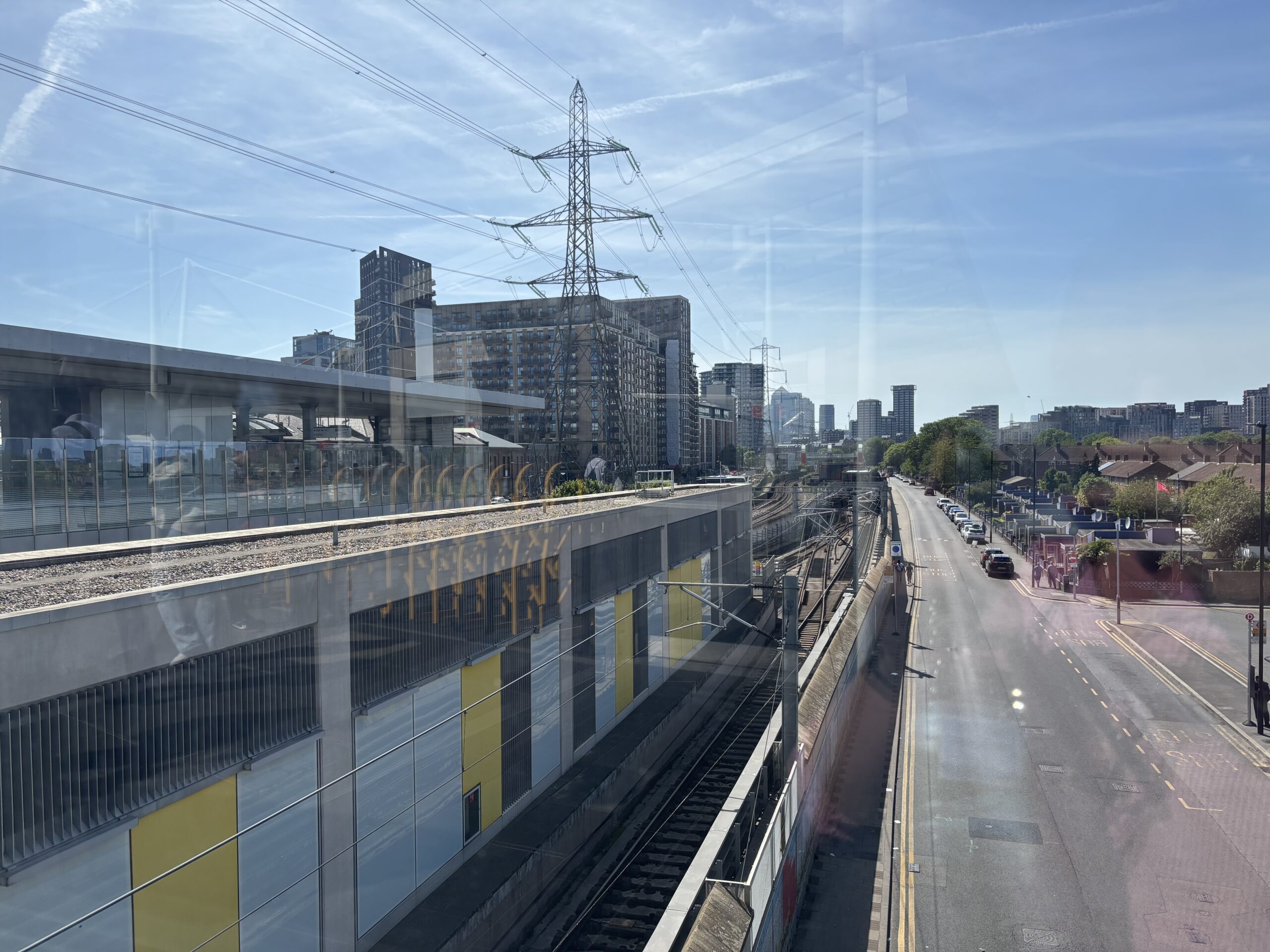
That dialogue expanded further during a visit to Tipping Point in East London, a project developing circular economy approaches to construction and material reuse. Seeing reclaimed materials put back into community use, alongside conversations around sustainability, training and climate-conscious building practices, felt like a practical counterpoint to the cycles of demolition and waste that have shaped so many regeneration schemes across the UK. The project was developed in part by Resolve Collective, also influential in the development of CAN LCR.
What stayed with me most strongly was the contrast between demolition and reclamation.
Years earlier, Without These Walls emerged from the experience of witnessing our homes, streets and histories disappear through redevelopment policies in Liverpool. At Tipping Point, I encountered practitioners asking what it might mean to build differently altogether: to value what already exists rather than continually discarding it, whether materials, places or communities themselves.
What linked every aspect of the trip was ultimately the politics of value.
Whose histories matter.
Whose spaces survive.
Who gets included in conversations around regeneration.
And what forms of care might allow us to imagine more sustainable and socially responsible futures.
More recently, as my practice has expanded further into education and pedagogy, these conversations around participation, care and sustainability have started to feel more immediate in practical terms. What this experience reinforced for me was the importance of continuing to make work, and support projects, that bring people into real conversation with the places they live in, but in ways that recognise that community means different things to different people. There can be no single model for participation; it requires listening closely, making space for different kinds of connection, and not taking communication or belonging for granted.
—
Jayne Lawless, @jayne_lawless