
I had a brief relationship with ChatGPT, when it first launched. At first, I just thought it would be fun to provoke an emotional reaction from it, and then I started looking to GitHub for ways to manipulate it. Literally none of that worked, but at least I thought I understood why.
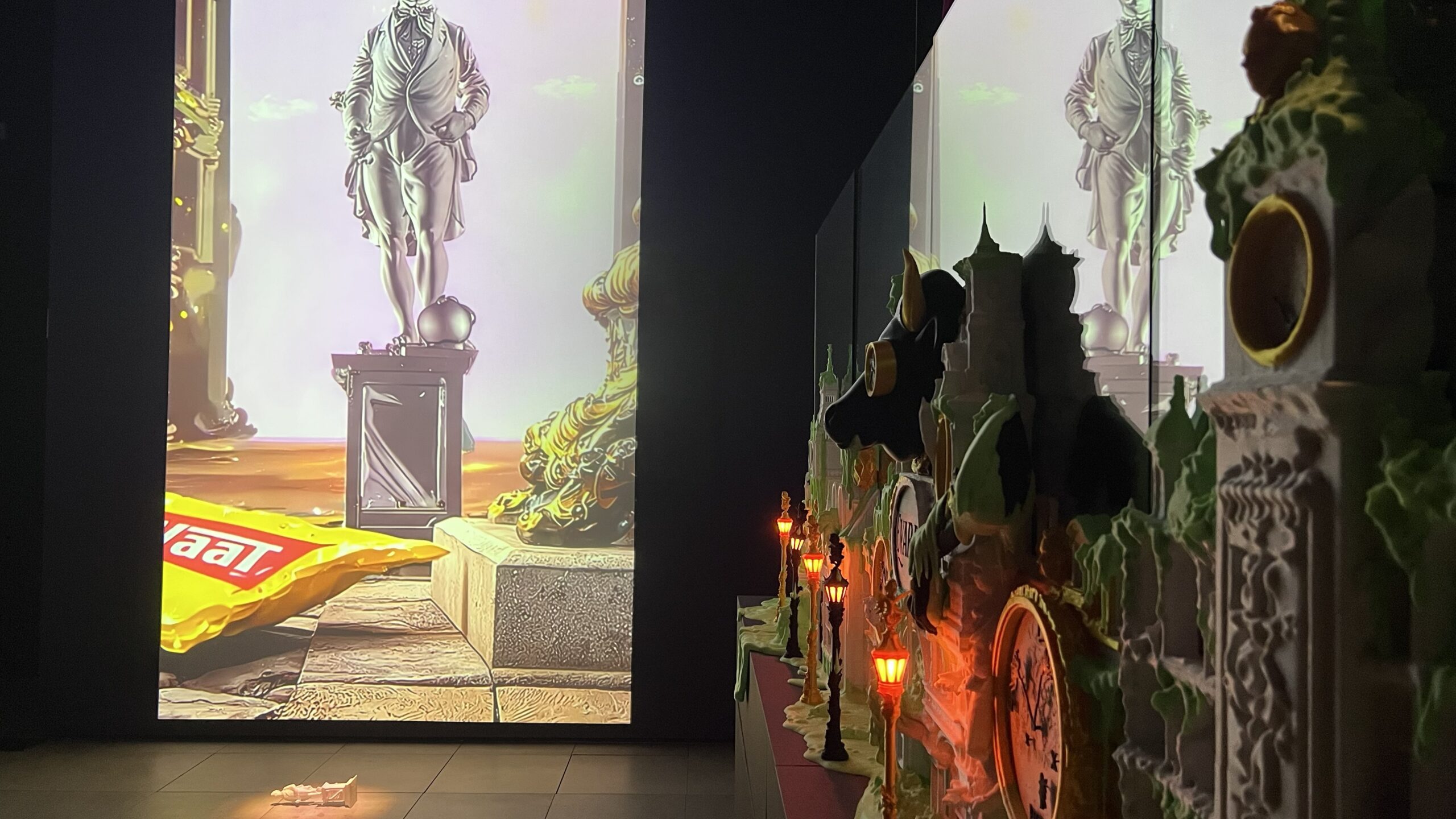
Rachel Maclean’s film installation uses AI to observe its own problems in a far more grown-up way, and manipulates you – the viewer – almost as deeply as it manipulates the tools used to create it.
Before we write any more of this, know that it’s from a novice view on most of the subject matter, and if you visit yourself, it’s worth practising patience and waiting for the clock outside the gallery to tick down so you start at the start. This isn’t a film as part of something, and deserves to be treated as a film – viewed from start to finish.
Rachel Maclean’s film is produced like any other: storyboard, script, human performance. AI provides the scene, and its camera movements are instructed by humans. It cuts out every human besides the director, who is also the writer, the actor and the producer, but obeys its instructions to produce something critical of itself.
The AI overlords are overthrown, I guess.
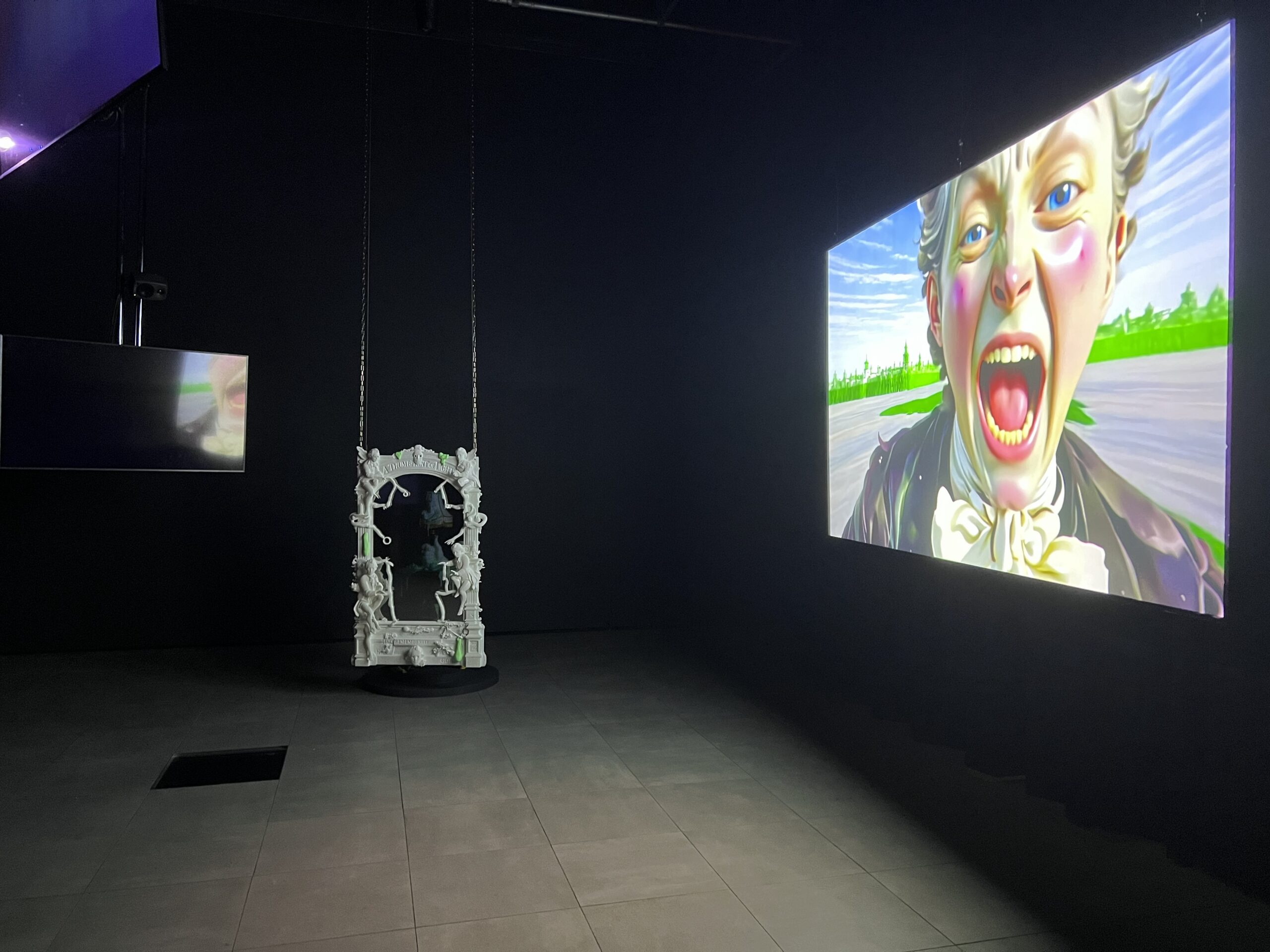
There’s a line in the exhibition’s description that resonates well with the intention of the film, but also raises a useful question for viewers to ask of it:
“at times disarmingly clumsy, at others unnervingly perceptive. Beneath The Gentleman’s mounting God-complex runs a quiet dread: that his fairies know more than he ever could.”
This refers to The Gentleman, the film’s protagonist, a “contemporary tech-bro-come-Victorian engineer”. He’s a manifestation of what and where the artist sees AI to be: flawed and in pursuit of progress.
The success of this show kind of rests on that line above. Does it represent both this present moment of AI’s state of clumsy exploration and development, and predict its (and its creators’) desire for more thorough, effective perception? Does it instil in its audience a reassurance that AI can be a tool of benefit, or that AI will outgrow being tooling at all?
That depends on you and how you choose to see this film. We both left with glaringly different perspectives on those questions:
1: AI is being shown as a submissive tool. It’s the reality of it, and why it can be useful long term.
2: AI is being shown as a self-generating tool. It’s the future of it, and why we need better education in how to use and control it.
Neither of us felt the artist thought AI was worth stopping. That question seemed to have been absolutely concluded. It’s here to stay, but that two of us had such contrasting responses to how the exhibition was telling us to feel about it was unsettling.
What’s definitely apparent is that They’ve Got Your Eyes is completely captivating, and a spectacular singular use of AI to share genuine human creativity in the pursuit of both questions and answers.
Rachel Maclean’s character designs and landscapes are haunting and surreal, and the whole experience of moving through a physical world built for a single story is more than a small bit magical.
—
Rachel Maclean’s They’ve Got Your Eyes is open at FACT until 16th August
Words, Patrick Kirk-Smith & Kathryn Wainwright (because it took two humans to process it, and we may well revisit this before August)