
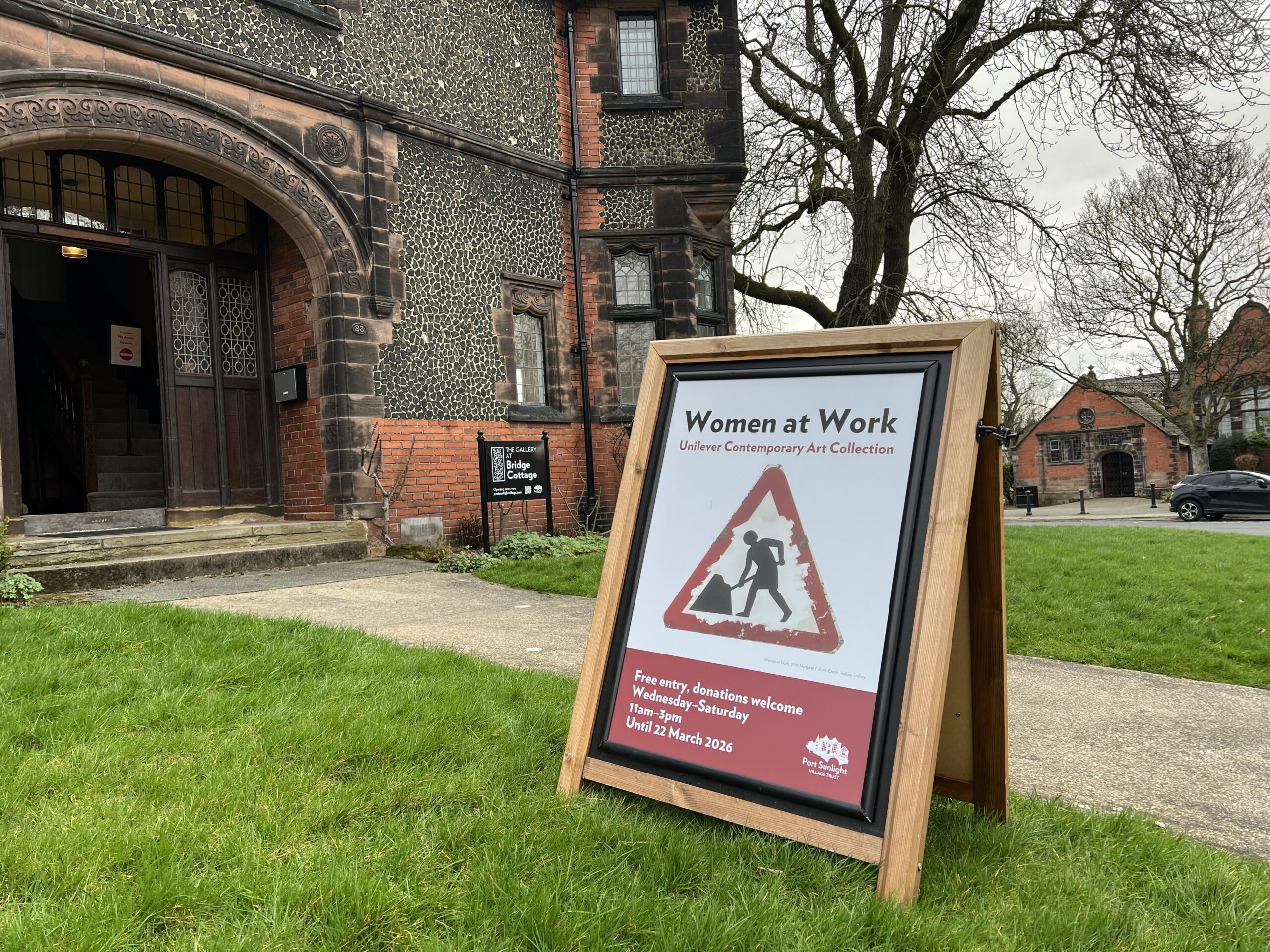
Since the 1970s, Unilever has been collecting and displaying art to build a more enjoyable environment for staff. That collection, The Unilever Contemporary Art Collection, isn’t generally on show, and it is rarely curated with the purpose of ‘Women at Work’, which makes this exhibition all the more intriguing.
OK, so Unilever have been in the news for all the wrong reasons lately. Ben & Jerry are particularly displeased. But, on a local level, they created an international corporation that embedded local value and social wellbeing in every brick of the socialist experiment that is Port Sunlight.
They were one of the earliest major companies to adopt work-place rights for women, with William Lever actively supporting the women’s suffrage movement, and implementing progressive swimming pools and libraries for female staff in the early 20th century.

Until the 1950s, the company employed women routinely in factory roles, but it wasn’t until 1953 that Doreen Wedderburn was appointed as their first divisional manager. From then, it took until 2020 for women at Unilever to make up at least half of the management roles at the company, which is dire, but still more progressive than most international organisations of their size.
I don’t know the ins and outs of Unilever’s history, but I wanted to understand whether this exhibition came from a place of true belief in representation and equality, or from a desire to cover failures. It feels genuine, and its more powerful for it.
More powerful still is the strength of this collection. I’m intrigued by the acquisition process for some of the works in this show, which for the majority of businesses looking for art work to brighten their offices would have been utterly overlooked. There are key pieces of contemporary art history included in this show, with Margaret Calvert’s road sign summing up the show’s purpose in one work.
And Lisa Milroy, who’s ‘File 1984’ actively addresses the theme of women at work, as part of a much wider body of work painting everyday objects from memory. Lisa Milroy, originally from Canada, graduated Goldsmiths in 1982. At the time, Unilever had only just removed stipulations that women’s contracts could be terminated upon marriage or pregnancy. So this was bought into a collection that was most likely going to be seen by male managers. By 2013, Lisa Milroy was a trustee of Tate, adding weight to artists voices in the organisation.
Unilever sharing this work now, six years on from actually achieving gender balance in management, is a great way of opening up collections, but it also encourages open debate about their history on women’s rights.
There’s more to this exhibition than the work, and there’s unavoidably some PR at its core, but it’s a beautifully put together celebration that at the very least sets a commitment to continue improving on equality.
—
Women at Work is open until 21st March at Bridge Cottage, Port Sunlight
Words, Kathryn Wainwright