Hill Station, still standing today, is a town with a purpose. In 1899 the Liverpool School of Tropical Medicine sent Ronald Ross to Freetown, Sierra Leone, to research the causes of malaria.
The result was Hill Station, a town built away from standing water and mosquito breeding grounds, for the sole and segregated residence of ‘Europeans Only’ and used almost exclusively by colonists and tourists.
Part of its legacy will always be positive, in that it was part of the road to understanding and preventing malaria, but beyond that it is a monument not just to architecture led by medicine, but to the architects of apartheid.
Specifically, one of the reasons Hill Station was built was to segregate colonial administrators from ‘non-whites’ to attempt further protection from malaria.
Today, the settlement is still inhabited by civil servants, though just 12 of the buildings survive, without a running water supply.
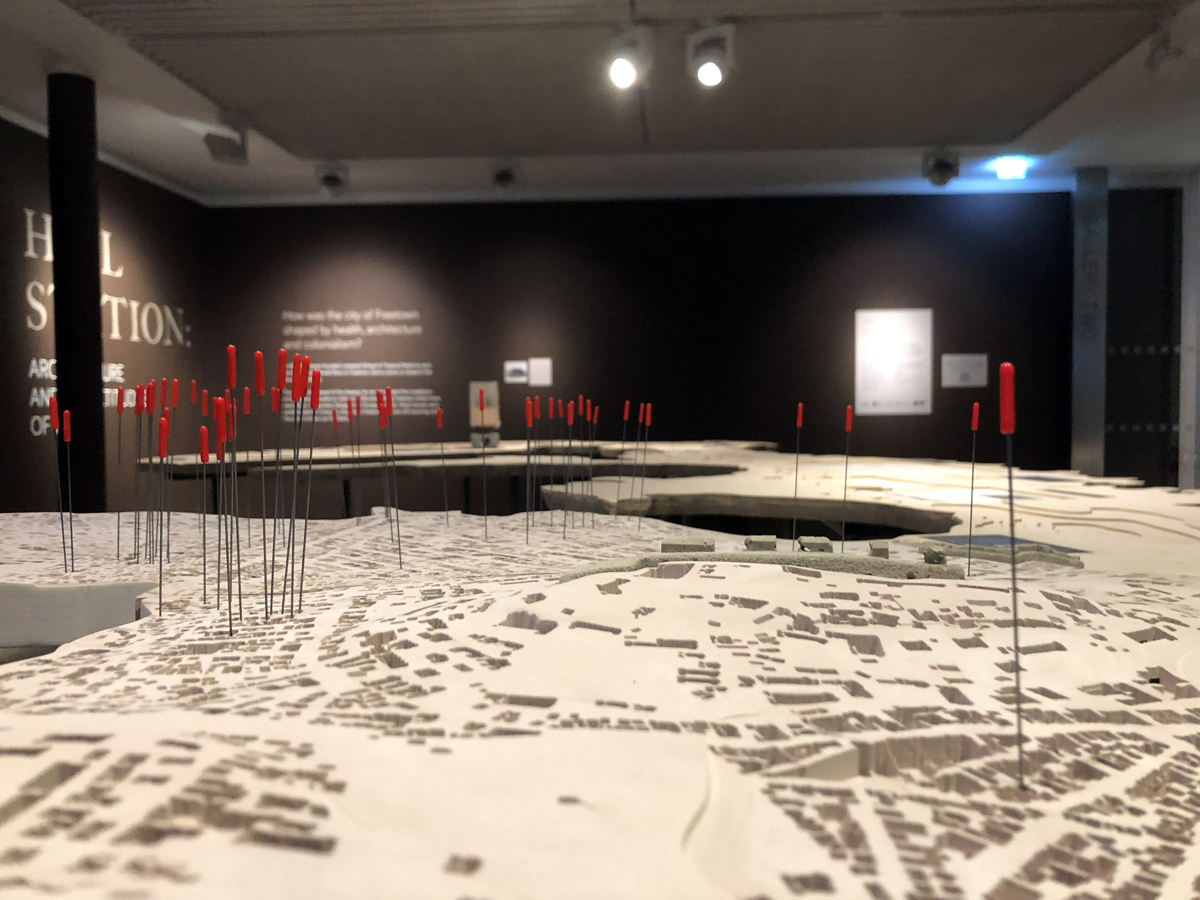
The exhibition presents an exceptional architectural model of the site, built from reclaimed aggregate from the old facade of the Liverpool School of Tropical Medicine.
The artists and researchers behind this exhibition reflected on it after their visit in 2022:
“we had little idea when we began our research that this remote elevated enclave owed its existence to decisions taken in Liverpool, by colonial-era scientists, administrators, and businessmen. Hill Station is a historic Freetown landmark, and it is an under-appreciated emblem of Liverpool’s troubled and uneven connection with West Africa.”
The model charts the relationship between these colonial-era scientists and the land they occupied, and is intensely engaging.
It’s an unknown piece of Liverpool’s history, linking not just the successes of the city as a port town (and associated colonial influence) but it’s significant place in scientific history too.
Hill Station is open at RIBA North until 16th November 2025
Words, Patrick Kirk-Smith