
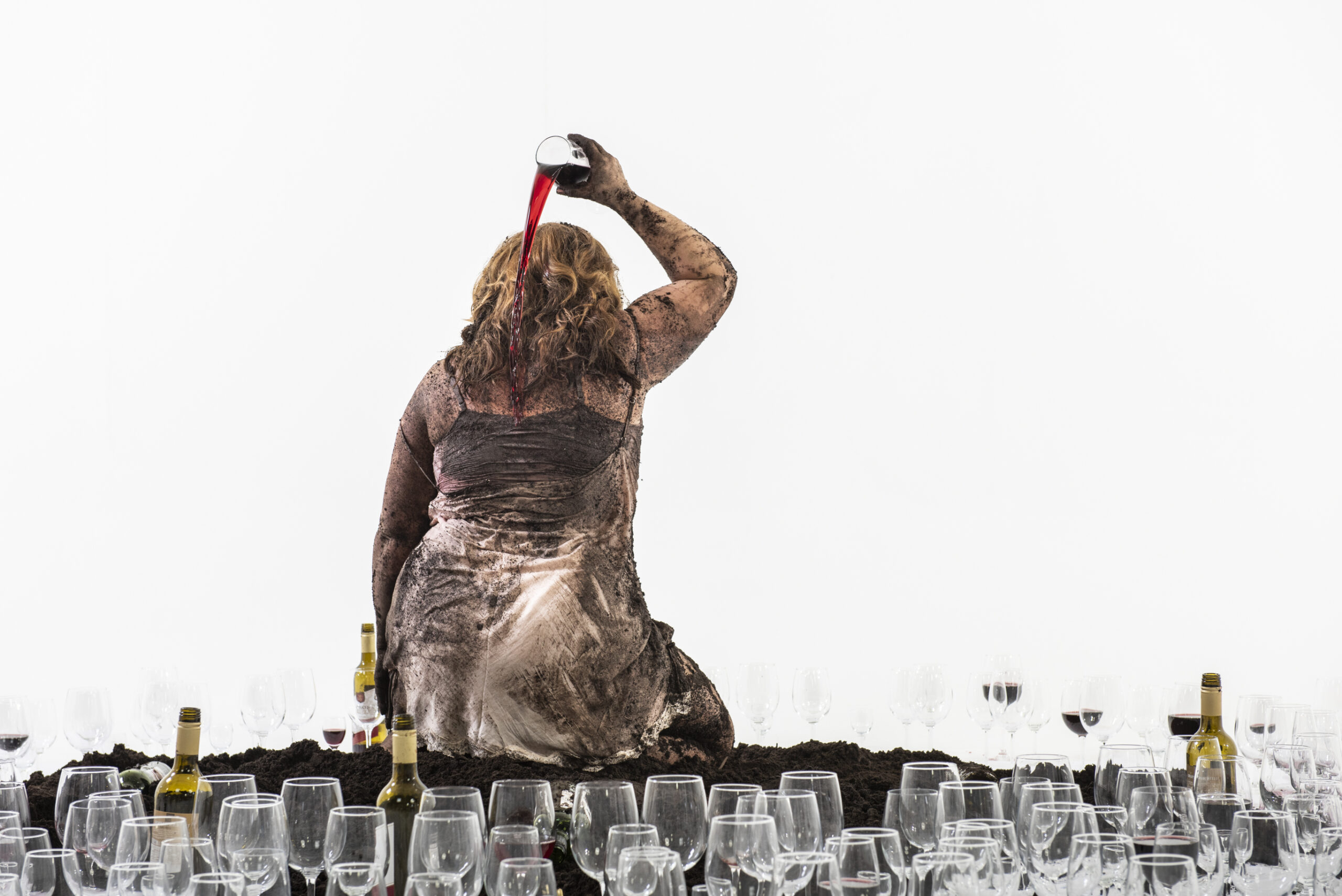
A ground-breaking installation exploring stories and the impact of suicide is to open in Liverpool’s historic Cunard Building next week.
Built upon lived and living experience of thoughts of suicide, suicide attempts, and of bereavement by suicide, it has been created by award-winning artist Mark Storor as an integral part of the collaborative arts project, The Suicide Chronicles.
Taking place between 5 September and 10 October 2026, including World Suicide Prevention Day (10 Sept) and World Mental Health Day (10 Oct), Close to Home has been developed in collaboration with Merseyside-based community arts organisation Heart of Glass, as an artistic space of contemplation, inviting audiences into a space of action, reflection and quiet assembly.
Close to Home brings together more than seven years’ work by Mark Storor, in collaboration with communities and individuals across England, Ireland and Wales with experience of suicide. Mark’s innate ability to depict personal stories and experiences through art, has created a philosophical space that attempts to express and articulate the unsayable around an issue that often exists in silence.
Patrick Fox, CEO of Heart of Glass, said: “When we started the project with Mark in 2018, we had no expectation of how long it would last or where it would take us. We quickly realised after the first Chronicle this was an artistic interrogation we had to carry forward to encompass as many voices and experiences as possible, to give them the time and space to be seen and heard.
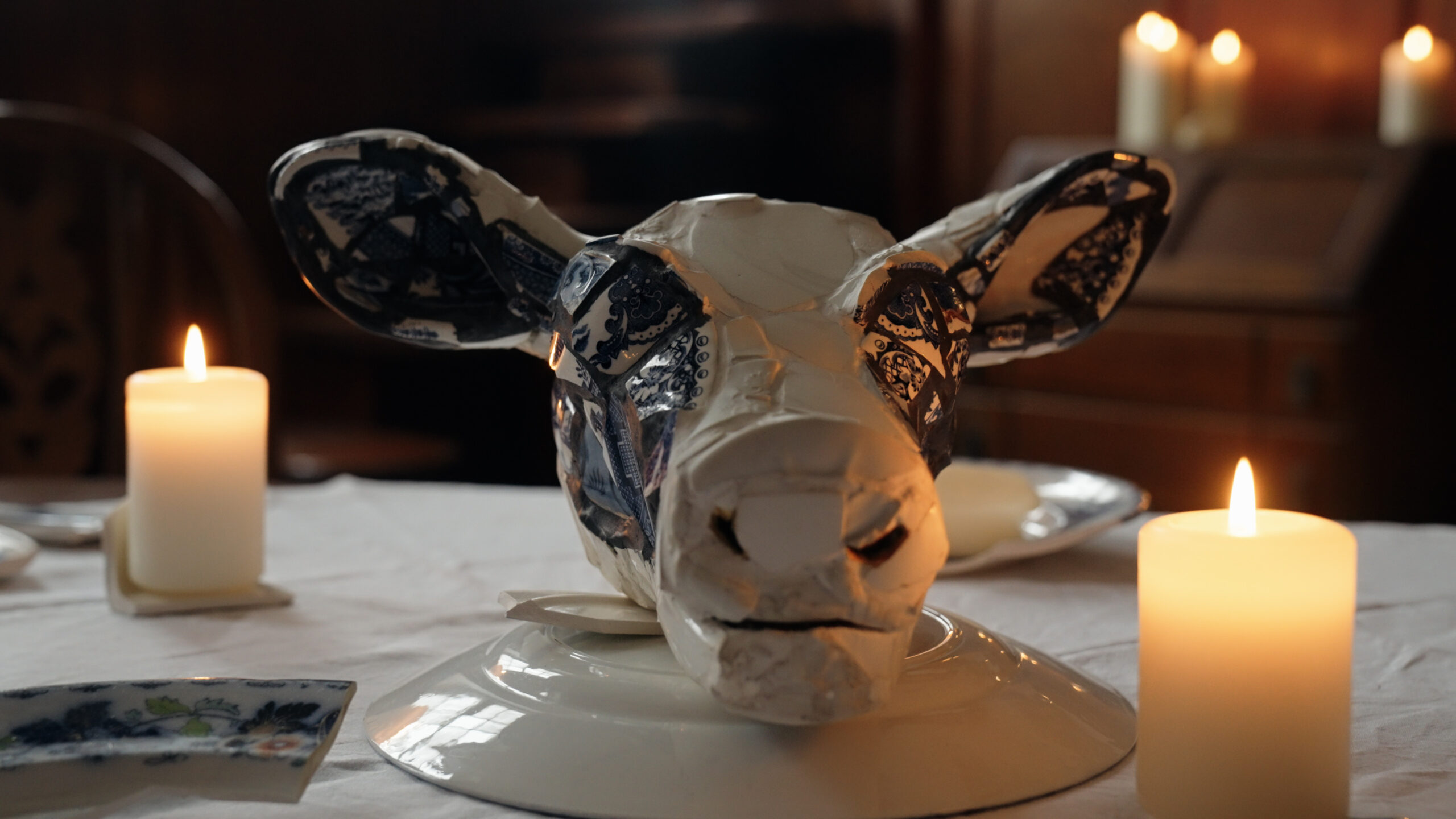
Chronicle Two: Stand Firm Compassion, Bold Refuge, Loyal Gentle Spirit, Image: Stephen King
“The impact of suicide on individuals, families and communities is something that affects many people across the world and remains an important and often difficult subject for us to engage with collectively. Through each of the six Chronicles we’ve worked with 50 people who have been impacted by suicide, and with research showing that one suicide can impact approximately 135 people, it’s a heartbreaking statistic. Each Chronicle or ‘chapter’ is uniquely defined by the experience of the individuals who made them and the time in which they were made. While they are different in content, they speak to each other collectively to give form to the infinitely complex and multi-layered nature of bereavement by suicide. The seventh chapter is Close to Home.”
Heart of Glass originally commissioned Mark to develop a project that would examine some of the difficult and challenging questions resulting from the impacts of suicide: In a world which demands action and reaction, what does it mean to contemplate, to give ourselves over to time, to listen, to make sense together?
At the time of commission in 2018, St Helens had the highest suicide rate in England and Wales, and the Suicide Chronicles project was born in response to the many stories of loss. St Helens was a town prepared collectively to address this, to find a language and a model of practice that did not exist, allowing Mark to work with the individuals in the local community and beyond using collaborative arts methodologies to address what is happening in our society.
Through the Chronicles he has brought together multiple experiences of suicide, including those of women bereaved by the suicide of their partners; of farmers with respect to their relationship to the land, and of the high rate of suicide amongst them. There are stories told from intergenerational perspectives of the impact of teen suicide on a community, and insight into the experiences of first responders on the front line of suicide.
Mark’s process of co-creation and collaboration has developed a multifaceted residency in the Cunard Building’s Arrivals Hall, which will be transformed into a beautiful theatrical environment that people can explore at their own pace, encountering a series of installations, film works, spoken work pieces and photographic displays. Each work is particular; poignant, vivid and truthful, shining light on individuals’ stories, while acknowledging and honouring the experiences of those we have lost.
Mark Storor said: “Close to Home will bring all six Chronicles into one space, addressing together, for the first time, what is happening in our communities as the result of suicide. The courage to meet the stark realities of suicide head on began in St Helens and gained momentum; a ripple effect generated through the numerous stories I am humbled to have had shared with me.
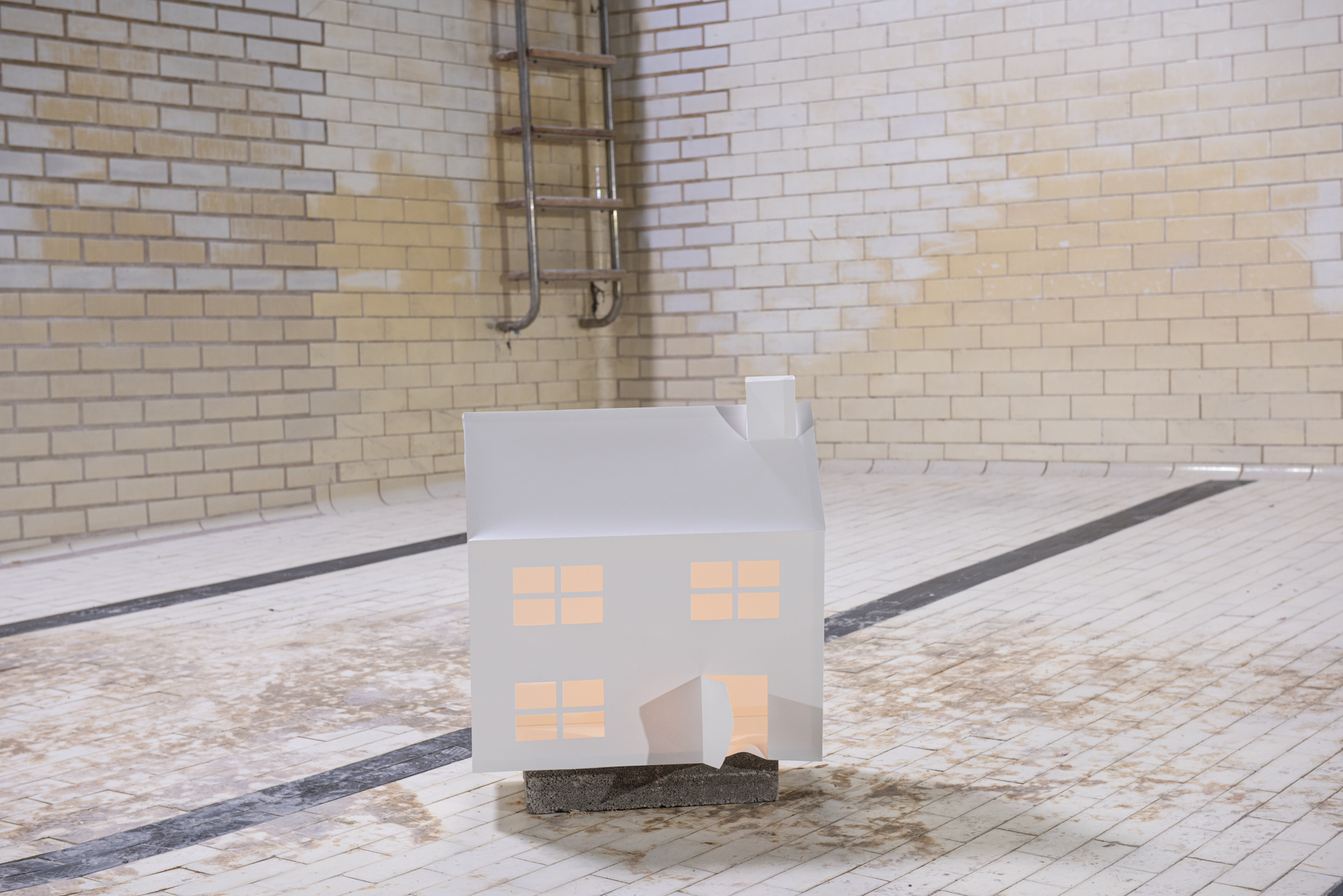
“It’s the journey we’ve been on, the people we’ve met and worked with, the years that have passed, and the moments that have led to the here and now. It’s a contemplation, a philosophical space, an exploration, an interrogation, and it’s as much about life as it is about death. Visitors will be able to explore their relationship with self, with one another, with those across the world, hopefully to value what fundamentally connects us all as humans. I hope that those who have been impacted by suicide will gain a strength from collectively witnessing together the stories of others and understand that art can have a role in all our lives for gaining renewed outlook, relief, strength and remembrance.”
Over six weeks, The Suicide Chronicles will be in residence at the Cunard Building, bringing together films, photographs, sculptures, poetry and music that have emerged from this long-term shared creative process. Audiences will be invited to spend time with the artworks, to witness each person’s story and to bring their stories too, reflecting on the impact of suicide on individuals and communities, and the shared human experiences of grief, care and connection.
During its residency the Chronicles will evolve further through a programme of performances and conversations with guests, along with holding space for city-wide conversations, and access to support for those that need it to form a legacy beyond the display of Close to Home, from which to learn, reflect, connect and reach out for help when needed.
Close to Home has been made possible with funding from Arts Council England, Esmée Fairbairn Foundation and Paul Hamlyn Foundation, and is presented in partnership with Liverpool City Council, Culture Liverpool and Public Health Liverpool.
Liverpool City Council’s Cabinet Member for Health, Wellbeing and Culture, Councillor Harry Doyle, said: “Culture Liverpool and Public Health Liverpool are proud to be partnering with Heart of Glass on this important and poignant project.
“Suicide remains a public health priority for Liverpool and our prevention work continues to grow, but the fact that we still don’t talk openly about suicide and it remains a “taboo” subject is one of the biggest challenges in our work.
“By collaborating with partners on projects like Close to Home, we can use the power of art and culture to break down barriers and bring our communities together to learn and reflect, create space for important conversations, and provide access to support for those that need it.
“Talking about mental health and suicide can be difficult, but it’s one of the most important things we can do – research shows that open conversations can raise awareness, break down stigma, encourage people to seek help, and support their wellbeing.
“We are committed to fostering a community where people feel able to speak openly, share their feelings, and access the help they need.”
Close to Home is free to visit. No ticket required.
www.heartofglass.org.uk/CloseToHome
A programme of events will accompany the installation, including a concert featuring music and spoken word at the Liverpool Philharmonic Music Room (10 September), and talks from Edith Hall and Professor Amy Chandler within the installation space, with further events to be announced. Booking details will be available soon.
Content advisory: Close to Home explores lived and living experiences of suicide and bereavement. It does not depict suicide, but it does engage with themes that some people may find emotionally challenging. People are welcome to engage in whatever way feels right for them, and support information will be available throughout a visit.